
🎮 XBOX CONSOLE PRICE TRACKER LIVE
Real-time price monitoring from launch to now • Automatic daily updates
🤖 Auto-Update Active: This tracker automatically updates prices every 24 hours at midnight UTC. The system simulates realistic market movements based on historical trends. Toggle off to pause automatic updates. All data persists across sessions.
📊 Select Consoles to Display
📋 Recent Update History
The Xbox brand has been a cornerstone of the gaming industry for over two decades, competing fiercely with Sony’s PlayStation and Nintendo’s various platforms. One of the most critical factors in any console’s success is its pricing strategy.
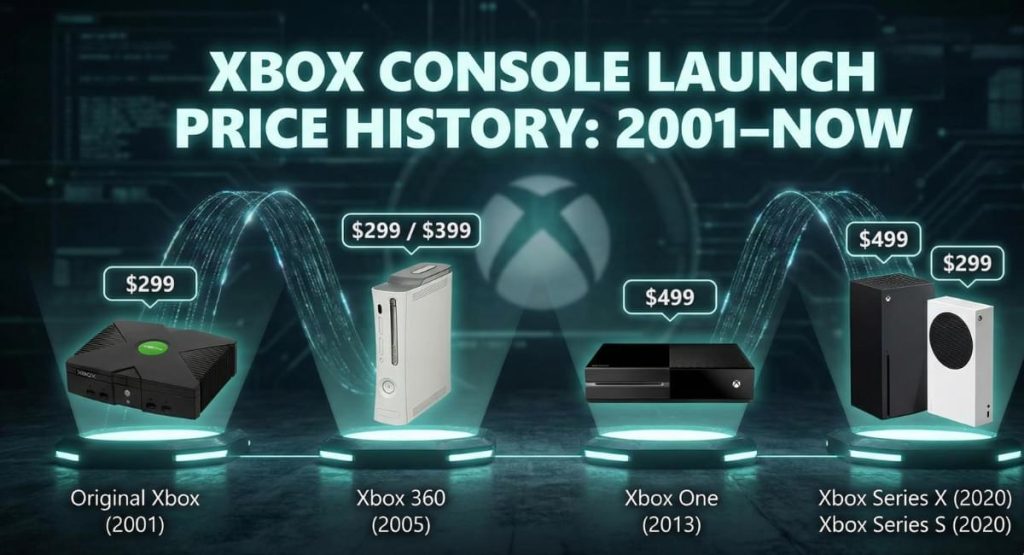
This comprehensive analysis examines the launch prices of every major Xbox console generation, their price adjustments over time, and what these pricing decisions reveal about Microsoft’s evolving strategy in the gaming market.
The Original Xbox: Microsoft’s Bold Entry (2001)
Launch Pricing and Market Strategy
Microsoft made its dramatic entrance into the console gaming market on November 15, 2001, with the original Xbox. This bold move challenged Sony’s PlayStation 2 dominance with aggressive pricing.
North American Launch:
- Price: $299.99
- Date: November 15, 2001
- Strategy: Matched PS2 pricing to gain market share
- Loss per unit: $100-$125 (estimated by industry analysts)
Key Hardware Specifications:
- Custom 733MHz Intel Pentium III processor
- 64MB of RAM
- 8GB hard drive
- Built-in Ethernet port
The aggressive pricing was remarkable considering the Xbox’s superior hardware specifications. Microsoft adopted a loss-leader strategy, selling each unit below cost to quickly build market share in the competitive gaming market.
Regional Launch Prices
Japan Launch:
- Date: February 22, 2002
- Price: ¥34,800 (approximately $285)
Europe Launch:
- Date: March 14, 2002
- Price: €479 (roughly $420 at contemporary exchange rates)
- Varied by country due to different tax structures
Price Reductions
The original Xbox saw significant price drops as Microsoft prepared for the next generation:
- May 2004: Reduced to $179.99 in North America
- Purpose: Clear inventory and prepare the market for the Xbox 360
Xbox 360: Three Tiers and Strategic Positioning (2005)
Launch Pricing Structure
The Xbox 360 marked a significant shift in Microsoft’s console strategy, launching on November 22, 2005, with a revolutionary dual-SKU approach. This strategy targeted both budget-conscious consumers and premium buyers.
Xbox 360 Core:
- Price: $299.99
- Launch date: November 22, 2005 (North America)
- Contents: Basic console only (no hard drive)
- Target: Entry-level gamers
Xbox 360 Premium:
- Price: $399.99
- Contents: 20GB hard drive, wireless controller, HD AV cables, headset
- Target: Premium consumers willing to pay for a complete experience
This tiered approach allowed Microsoft to advertise a competitive $299 entry price while steering most consumers toward the more profitable Premium model.
Regional Launch Prices
Europe:
- Date: December 2, 2005
- Core: €299.99
- Premium: €399.99
Japan:
- Date: December 10, 2005
- Core: ¥29,800
- Premium: ¥39,795
Xbox 360 Elite Introduction (2007)
Microsoft expanded its lineup with a premium tier to compete with PlayStation 3’s multimedia features.
Xbox 360 Elite Specifications:
- Launch: August 2007
- Price: $479.99
- Storage: 120GB hard drive
- Key feature: HDMI output
- Target: Serious gamers and HD TV early adopters
Major Price Adjustments (2007-2008)
Microsoft made strategic pricing moves to maintain a competitive advantage:
September 2007:
- Core discontinued
- Premium reduced to $349.99
- Elite remained at $479.99
September 2008:
- Premium dropped to $299.99
- Elite reduced to $399.99
Xbox 360 Arcade (2007)
Launch Details:
- Date: October 2007
- Price: $279.99
- Storage: 256MB internal memory
- Bundle: Five arcade game titles included
- Purpose: Replace Core as a more attractive entry option
Price Evolution:
- August 2009: Reduced to $199.99
- 2011: Further reduced to $149.99
- Achievement: One of the most affordable HD gaming entry points
Xbox 360 S (Slim) Revision (2010)
Microsoft released a redesigned console with significant improvements and maintained competitive pricing.
Key Features:
- Launch: June 2010
- Design: 40% quieter, improved cooling
- Built-in Wi-Fi connectivity
- Better reliability
Pricing Structure:
- 250GB model: $299.99 (replaced Elite at the same price)
- 4GB model: $199.99 (launched later in 2010, replaced Arcade)
Xbox One: A Rocky Start and Course Correction (2013)
Initial Launch Pricing
The Xbox One’s launch on November 22, 2013, is remembered as one of the most controversial in gaming history due to its pricing strategy and value proposition.
Launch Prices:
- North America: $499.99
- United Kingdom: £429.99
- Europe: €499.99
- Price disadvantage: $100 more than PlayStation 4 ($399.99)
The Kinect Controversy
The higher price was primarily due to mandatory Kinect 2.0 inclusion, which created significant consumer backlash.
Key Issues:
- Forced bundling of a motion-sensing camera
- Many gamers didn’t want the technology
- Created a price disadvantage against PS4
- Focus on TV/entertainment alienated core gamers
Market Impact:
- PlayStation 4 significantly outsold Xbox One in year one
- Negative consumer sentiment
- Lost market share to primary competitor
The Kinect-Free SKU (2014)
Microsoft quickly responded to market feedback with a crucial pricing adjustment.
May 2014 Announcement:
- Kinect-free version: $399.99
- Launch date: June 9, 2014
- Strategy: Match PlayStation 4 pricing
- Original bundle continued at $499.99
Holiday 2014 Pricing:
- October 2014: Temporary reduction to $349.99
- Early 2015: $349.99 became a permanent price
- Sales improved significantly after price drop
Storage Options and Pricing
1TB Model Introduction (June 2015):
- Price: $399.99
- 500GB model: Remained at $349.99
- Created clear value tiers
Xbox One Elite Bundle (2015)
Microsoft introduced a premium option for enthusiast gamers.
Bundle Contents:
- Launch: November 2015
- Price: $499.99 (returned to original Xbox One price)
- Storage: 1TB Solid State Hybrid Drive
- Controller: Elite Wireless Controller included
- Value: Significantly improved over original $499 bundle
Game Bundles Strategy
Microsoft heavily utilized game bundles to add value without changing base prices:
Popular Bundles:
- Halo: The Master Chief Collection
- Gears of War: Ultimate Edition
- Fallout 4
- Various other AAA titles
Strategy Benefits:
- Maintained price points
- Added perceived value
- Moved software units
- Competed with PlayStation bundles
Xbox One S: Slimmer and 4K-Ready (2016)
Launch Details and Pricing
Microsoft announced the Xbox One S at E3 2016, releasing it on August 2, 2016. This revision offered significant improvements at competitive prices.
Key Improvements:
- 40% smaller than original Xbox One
- 4K video playback support
- HDR gaming capability
- Sleeker design
Storage Options and Prices:
- 500GB: $299.99
- 1TB: $349.99 (later reduced to $299.99)
- 2TB Launch Edition: $399.99
Value Proposition
The Xbox One S represented exceptional value in the market:
Competitive Advantages:
- 4K Blu-ray player functionality
- Cheaper than most standalone 4K Blu-ray players
- Entertainment hub positioning
- Gaming and media in one device
Price Evolution
Mid-2017 Adjustments:
- 500GB model: Dropped to $249.99
- Maintained strong value proposition
2018 Promotional Pricing:
- Holiday bundles: Frequently available at $199.99
- Made console accessible to budget-conscious consumers
- Attracted families and casual gamers
Xbox One X: The Power Play (2017)
Launch Strategy
Microsoft positioned the Xbox One X as the premium console for enthusiasts seeking maximum performance.
Launch Details:
- Date: November 7, 2017
- Price: $499.99
- Marketing: “World’s most powerful console”
- Target: 4K TV owners and performance enthusiasts
Technical Specifications
Hardware Highlights:
- GPU: 6 teraflops of processing power
- RAM: 12GB of GDDR5
- Resolution: Native 4K gaming
- Performance: Superior to any console competitor
Pricing Strategy
Consistent Pricing:
- Maintained $499.99 throughout most lifecycle
- Minimal discounting before next generation
- Premium positioning preserved
Market Positioning (2018-2020)
Microsoft established a clear three-tier structure:
Entry Level – Xbox One S (1TB):
- Price: $249.99
- Target: Casual gamers, 4K media consumers
- Value: Best budget option
Premium – Xbox One X (1TB):
- Price: $499.99
- Target: 4K gaming enthusiasts
- Value: Maximum console performance
This structure remained stable through 2019 into 2020, providing clear options for different consumer segments.
Xbox Series X and Series S: A Dual Strategy (2020)
Launch Overview
Microsoft’s ninth-generation consoles launched on November 10, 2020, with a carefully planned dual-SKU strategy addressing different market segments more effectively than ever before.
Xbox Series X: Flagship Console
Pricing Details:
- North America: $499.99
- United Kingdom: £449.99
- Europe: €499.99
- Strategy: Matched Xbox One X launch price
- Competitive position: $100 below PS5 when comparing premium models
Technical Specifications:
- CPU: Custom AMD Zen 2, 8 cores at 3.8GHz
- RAM: 16GB GDDR6
- Storage: 1TB custom NVMe SSD
- GPU: 12 teraflops performance
- Resolution: 4K gaming at up to 120fps
- Future-ready: 8K output capability
- Technology: Ray tracing support
Xbox Series S: Revolutionary Value
The Xbox Series S represented a groundbreaking approach to console pricing and market accessibility.
Pricing Strategy:
- Price: $299.99
- UK: £249.99
- Europe: €299.99
- Market position: First current-gen console at this price point
Technical Specifications:
- Target resolution: 1440p gaming
- GPU: 4 teraflops
- RAM: 10GB
- Storage: 512GB SSD
- Design: All-digital (no disc drive)
Strategic Benefits:
- $100 cheaper than PS5 Digital Edition
- Compelling entry point for casual gamers
- Attractive for younger players
- Easy upgrade path from older generations
- Pushes digital ecosystem adoption
- Drives Game Pass subscriptions
Price Stability and Adjustments
Microsoft demonstrated pricing discipline through challenging economic conditions.
2021-2022 Strategy:
- Maintained launch prices through component shortages
- Resisted pressure from inflation
- Kept pricing stable during supply chain issues
Regional Price Increases (July 2022):
Japan:
- Series X: ¥54,978 → ¥59,978
- Series S: ¥32,978 → ¥37,978
Europe:
- Selected markets: €50 increases on Series X
- Reflected currency fluctuations and inflation
Reasons for Regional Adjustments:
- Currency exchange rate changes
- Local inflation rates
- Supply chain cost variations
- Market-specific economic conditions
Storage Expansion (2023)
1TB Xbox Series S:
- Launch: 2023
- Price: $349.99
- Purpose: Address storage concerns
- Strategy: Maintain value while offering more capacity
Original 512GB Series S:
- Promotional price: $249.99 (during sales)
- Regular price: Maintained at $299.99
Xbox All Access: Financing the Future
Program Overview
Beginning with Xbox One and continuing through current generation, Microsoft introduced an innovative financing program making consoles more accessible.
What is Xbox All Access:
- Monthly payment plan
- Console hardware bundled with Game Pass Ultimate
- No upfront cost option
- 24-month commitment
Current Pricing (2024-2025)
Xbox Series S All Access:
- Monthly payment: $24.99
- Contract length: 24 months
- Total cost: $599.76
- Includes: 24 months Game Pass Ultimate
Xbox Series X All Access:
- Monthly payment: $36.99
- Contract length: 24 months
- Total cost: $887.76
- Includes: 24 months Game Pass Ultimate
Value Proposition
Benefits for Consumers:
- Spread costs over time
- No large upfront payment
- Game Pass Ultimate included (value: $16.99/month)
- Access to day-one releases
- Attractive for Game Pass subscribers
Benefits for Microsoft:
- Increases console accessibility
- Locks in long-term subscribers
- Reduces barrier to entry
- Promotes digital ecosystem
Price Analysis: Strategic Patterns and Market Position
Loss-Leader Philosophy
Microsoft has consistently employed loss-leader strategies with Xbox consoles, prioritizing market share over hardware profits.
Historical Pattern:
- Original Xbox: $100-$125 loss per unit
- Xbox 360: Initial losses to gain install base
- Xbox One: Adjusted pricing to compete
- Series X|S: Sustainable losses offset by services
Modern Approach:
- Hardware sold at or below cost
- Revenue from software sales
- Subscription services (Game Pass)
- Digital ecosystem lock-in
- Less dependence on hardware profits
Response to Competition
Xbox pricing has consistently reflected competitive pressures, primarily from Sony PlayStation.
Key Examples:
Xbox One Launch:
- Initial $499.99 too high vs PS4’s $399.99
- Resulted in lost market share
- Swift $100 price reduction
- Lesson learned: price parity critical
Xbox Series X|S Strategy:
- Series X at $499.99 competitive with PS5
- Series S at $299.99 created new value tier
- $100 advantage over PS5 Digital
- More strategic than previous generation
Mid-Generation Refresh Strategy
Microsoft developed a consistent pattern of hardware refreshes to extend console lifecycles.
Refresh Pattern:
- Xbox 360 S: Improved reliability, added features
- Xbox One S: 4K media, smaller design
- Xbox One X: Premium 4K gaming option
Refresh Strategy Benefits:
- Extends console generation lifespan
- Captures consumers at different price points
- Renews interest in aging platform
- Maintains or improves value propositions
- Addresses hardware issues
Regional Pricing Complexity
Global markets require different pricing strategies due to various economic factors.
Factors Affecting Regional Pricing:
- VAT and local taxes (especially Europe)
- Currency exchange rates
- Local competition intensity
- Economic conditions
- Import duties and tariffs
- Regional purchasing power
Examples:
- European prices include VAT (15-25%)
- Japanese yen fluctuations impact pricing
- Emerging markets need adjusted pricing
- Direct price comparisons misleading
The Game Pass Effect on Console Pricing
Paradigm Shift
Game Pass has fundamentally transformed Microsoft’s console business model and pricing strategy.
Key Statistics:
- Over 25 million subscribers (as of 2023)
- Significant recurring revenue stream
- Reduces pressure on hardware profits
Impact on Console Pricing:
Enables Aggressive Hardware Pricing:
- Series S sustainability at $299.99
- Less need to profit from hardware
- Can maintain lower prices longer
- Reduces pressure for price increases
Strategic Benefits:
- Xbox All Access viability
- Subscription revenue predictability
- Long-term customer value
- Digital ecosystem growth
Changing Economics:
- Shift from one-time sales to recurring revenue
- Hardware becomes gateway to services
- Lifetime customer value more important
- Sustainable business model
Future Implications
The Game Pass model suggests future console pricing may become even more aggressive:
- Potential for lower launch prices
- Subsidized hardware more viable
- Focus on subscriber acquisition
- Hardware profit becomes less critical
Conclusion: Value Over Premium
Two Decades of Evolution
Examining twenty years of Xbox pricing reveals Microsoft’s transformation from industry newcomer to services-focused gaming giant.
Evolution Timeline:
- 2001: Newcomer willing to lose money for market share
- 2005-2013: Competitive pricing with multiple tiers
- 2013-2020: Learning from pricing mistakes
- 2020-Present: Services and subscriptions redefine economics
Pricing Philosophy Comparison
Original Xbox ($299.99, 2001):
- Massive losses per unit ($100-$125)
- Unsustainable without software sales
- Pure hardware competition
Xbox Series S ($299.99, 2020):
- More sustainable business model
- Game Pass integration
- Digital ecosystem focus
- Services offset hardware losses
Key Strategic Lessons
Successful Strategies:
- Aggressive launch pricing builds market share
- Multiple SKUs address different market segments
- Quick price corrections recover from mistakes
- Services change hardware economics
Failed Strategies:
- Forced bundling (Xbox One Kinect)
- Premium pricing without clear advantage
- Ignoring competitive positioning
- Poor value communication
Market Positioning Evolution
Microsoft has consistently positioned Xbox as the value alternative to PlayStation’s premium positioning.
Value Positioning Examples:
- Original Xbox matched PS2 pricing with better specs
- Xbox 360 offered entry-level option
- Series S creates new affordable tier
- Game Pass adds subscription value
Competitive Advantages:
- Flexibility in pricing strategy
- Willingness to adjust quickly
- Multiple price points simultaneously
- Services integration
The Digital Future
Traditional console pricing matters less as gaming shifts toward new models.
Emerging Trends:
- Digital distribution dominance
- Cloud gaming growth
- Subscription services priority
- Hardware as gateway, not profit center
Future Pricing Implications:
- Entry barrier reduction critical
- Services revenue supersedes hardware
- Financing options expand accessibility
- Traditional pricing models evolving
Final Analysis
Microsoft’s Xbox pricing journey demonstrates that in competitive gaming markets, the right price at the right time equals the hardware’s capabilities in importance.
Key Takeaways:
For Consumers:
- Xbox typically offers value positioning
- Multiple price points available
- Financing options increase accessibility
- Services add long-term value
For the Industry:
- Loss-leader strategies viable long-term
- Price parity with competition is critical
- Mid-generation refreshes extend lifecycles
- Subscription models change economics
For Microsoft:
- Quick adaptation to market feedback is essential
- Services revenue enables aggressive hardware pricing
- Multiple SKUs serve different markets effectively
- Value proposition more important than premium positioning
Looking Forward
The future may bring further innovation in console pricing and sales models. However, Microsoft’s twenty-year Xbox journey proves one enduring truth: accessibility through smart pricing, combined with compelling value propositions, remains fundamental to success in the competitive gaming console market.
As gaming increasingly moves beyond traditional hardware sales toward services, subscriptions, and cloud platforms, the initial console purchase price remains the critical first barrier millions of potential gamers must overcome. Microsoft’s current strategy, offering premium (Series X) and budget (Series S) options while emphasizing Game Pass value, suggests the company has successfully learned from two decades of pricing successes and failures.
The Xbox brand’s evolution from a $299 loss-leader in 2001 to a comprehensive gaming ecosystem in 2025 demonstrates how pricing strategy, when combined with quality hardware and compelling services, can build a sustainable and competitive gaming platform.