
The pricing landscape is shifting. Traditional subscription models are giving way to a revolutionary approach that ties costs directly to results achieved.
Outcome-based pricing represents a fundamental shift in how businesses charge for their services. Rather than fixed monthly fees, companies now pay based on measurable performance metrics and actual value delivered.
Industry forecasts indicate that 40% of enterprise software will include outcome-based pricing elements by 2025-2026. This model aligns vendor success with customer success, creating a partnership rather than a transactional relationship.
Understanding this pricing innovation is essential for businesses looking to stay competitive in the evolving SaaS landscape. Similar to how pricing tags influence consumer behavior, outcome-based models reshape B2B purchasing decisions.
What is Outcome-Based Pricing?
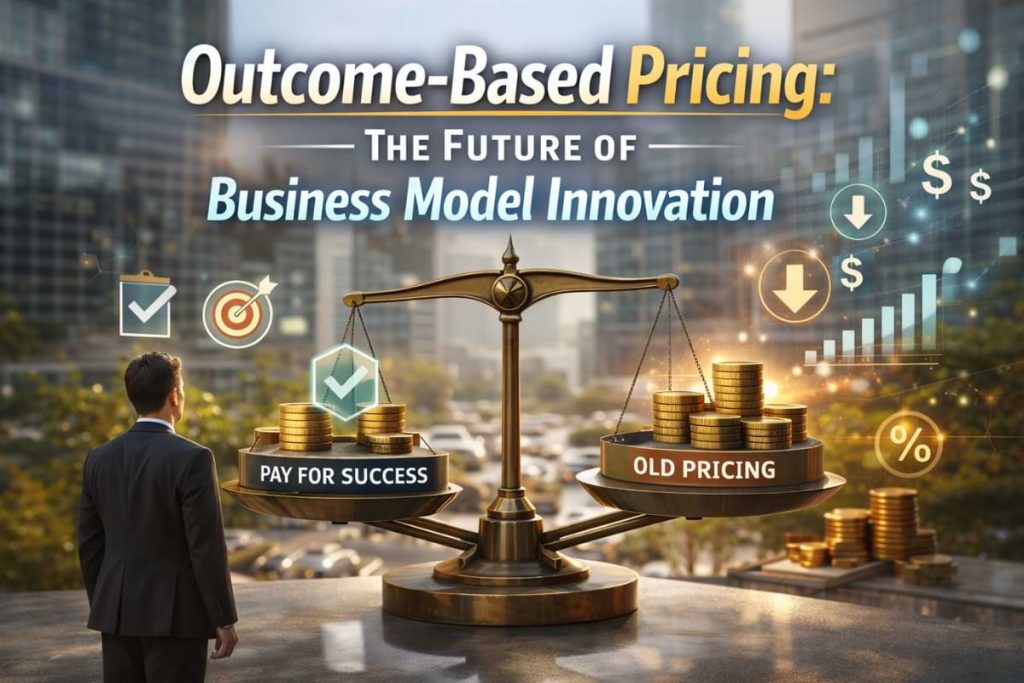
Outcome-based pricing is a business model where vendors charge customers based on measurable results rather than fixed fees or usage metrics.
This pricing strategy shifts financial risk from the buyer to the seller. Vendors only receive full payment when they deliver specific, agreed-upon outcomes.
Key characteristics include:
- Performance metrics tied directly to pricing
- Variable payment structures based on results achieved
- Shared accountability between vendor and customer
- Clear success criteria defined upfront
- Alignment of financial incentives with business outcomes
Outcome-Based vs Subscription Pricing
Traditional subscription models and outcome-based pricing differ fundamentally in structure and risk allocation.
While subscription pricing offers predictability, it disconnects payment from value delivery. Outcome-based models address this gap by creating performance accountability.
The contrast mirrors broader pricing evolution, similar to how real-time pricing algorithms adapt to customer behavior and willingness to pay.
Detailed Comparison:
| Factor | Subscription Pricing | Outcome-Based Pricing |
| Payment Structure | Fixed monthly/annual fee | Variable based on results |
| Risk Distribution | Customer bears all risk | Shared risk between parties |
| Value Alignment | Payment regardless of value | Direct correlation to value |
| Revenue Predictability | High predictability | Variable revenue streams |
| Customer Commitment | Contract-based commitment | Performance-based retention |
| Vendor Incentive | Maintain subscriptions | Deliver measurable outcomes |
Industries Adopting Outcome-Based Models
Multiple sectors are embracing outcome-based pricing as they recognize its potential to build stronger customer relationships and drive genuine value creation.
This shift reflects broader changes in business strategy, not unlike how shrinkflation represents companies adapting pricing strategies to market pressures.
SaaS and Enterprise Software
Software companies lead the outcome-based pricing revolution. These platforms tie fees to specific metrics such as:
- User engagement rates and active user growth
- Revenue generated through the platform
- Cost savings achieved via automation
- Customer satisfaction scores and retention rates
Marketing automation platforms charge based on the leads generated. Customer success tools are priced according to retention improvements. Analytics software links fees to measurable business insights delivered.
Healthcare and Medical Devices
Healthcare providers increasingly adopt value-based care models. Medical device manufacturers tie equipment pricing to patient outcomes and recovery rates.
Pharmaceutical companies explore risk-sharing agreements where drug costs correlate with treatment effectiveness. This model reduces healthcare system burden while incentivizing innovation.
Diagnostic equipment suppliers charge based on accurate diagnoses delivered. Surgical tools pricing reflects successful procedure outcomes.
Professional Services and Consulting
Management consultants structure fees around project success metrics. Marketing agencies tie compensation to campaign performance and the ROI delivered.
Legal firms offer contingency arrangements for certain case types. Recruiting companies charge based on candidate retention beyond initial placement.
This approach builds trust and demonstrates confidence in service quality. Clients pay premium rates only when consultants deliver measurable business impact.
Financial Services
Investment managers charge performance fees based on portfolio returns. Fintech platforms price services according to transaction volumes and customer acquisition.
Payment processors link fees to successful transaction completion rates. Fraud detection systems charge based on threats prevented and losses avoided.
How to Implement Performance-Based Pricing
Transitioning to outcome-based pricing requires careful planning and execution. Companies must balance risk management with growth potential.
Successful implementation depends on clear metrics, transparent tracking systems, and aligned expectations between vendor and customer.
Step 1: Define Clear Success Metrics
Identify specific, measurable outcomes that demonstrate value. Metrics should be:
- Quantifiable and objectively measurable
- Directly influenced by your product or service
- Meaningful to customer business objectives
- Trackable through reliable data sources
- Achievable within reasonable timeframes
Step 2: Establish Baseline Measurements
Document current performance levels before implementation. Baseline data proves your impact and justifies outcome-based fees.
Conduct thorough assessments of customer operations. Gather historical data spanning multiple quarters. Use industry benchmarks for context and comparison.
Step 3: Create Transparent Tracking Systems
Implement real-time dashboards showing progress toward goals. Both parties need visibility into performance data and pricing calculations.
Automated reporting eliminates disputes and builds trust. Regular reviews ensure alignment and allow for course corrections when needed.
Step 4: Structure Payment Tiers
Design pricing tiers that reward exceptional performance while protecting against underperformance.
Consider hybrid models combining base fees with performance bonuses:
- Base fee covering operational costs
- Performance multipliers for exceeding targets
- Penalty clauses for missing minimum thresholds
- Bonus structures for breakthrough results
Step 5: Pilot with Strategic Customers
Test outcome-based pricing with a small group before full rollout. Choose customers who trust your capabilities and will provide honest feedback.
Use pilot results to refine metrics, adjust pricing tiers, and improve tracking systems. Document lessons learned and success stories for broader implementation.
ROI of Outcome-Based Pricing Models
Companies implementing outcome-based pricing report significant benefits across multiple dimensions. The model drives both vendor performance improvement and customer satisfaction gains.
Research indicates strong ROI when outcome-based models are properly structured and executed. However, benefits vary by industry and implementation quality.
Key Performance Indicators:
| Metric | Average Improvement | Timeframe |
| Customer Retention Rate | 25-35% | 12-18 months |
| Customer Lifetime Value | 40-60% | 24-36 months |
| Net Promoter Score | 15-25 points | 6-12 months |
| Sales Cycle Length | 20-30% reduction | 3-6 months |
| Product Adoption Rate | 45-55% | 6-9 months |
| Vendor-Customer Collaboration | 50-70% | Immediate |
These improvements translate directly to revenue growth and competitive advantage. Companies report stronger market differentiation and enhanced brand reputation.
Challenges and Considerations
Despite significant benefits, outcome-based pricing presents distinct challenges that require careful management.
Revenue Volatility
Variable income streams complicate financial planning and forecasting. Companies need stronger cash reserves and flexible cost structures to manage fluctuations.
Measurement Complexity
Accurate outcome tracking requires sophisticated systems and clear attribution models. Multiple factors influence results, making it difficult to isolate your contribution.
Invest in a robust analytics infrastructure. Establish data governance protocols. Define attribution rules before contract signing.
Extended Sales Cycles
Outcome-based contracts require more negotiation time and legal review. Customers scrutinize metrics and payment structures carefully before committing.
Customer Dependency
Success depends partly on customer behavior and engagement. Even exceptional service cannot guarantee outcomes if customers fail to adopt recommendations or use products effectively.
Frequently Asked Questions
What industries benefit most from outcome-based pricing?
SaaS platforms, professional services, healthcare providers, and financial services see the strongest results. Industries where value is measurable and outcomes are clearly attributable to vendor performance benefit most from this model.
How do companies protect against revenue loss?
Hybrid pricing models combine base fees with performance bonuses. Companies maintain minimum revenue floors while offering upside potential. Strong customer selection and rigorous qualification processes also reduce risk.
What metrics work best for outcome-based pricing?
Revenue growth, cost reduction, customer retention, user engagement, and time savings prove most effective. Choose metrics that customers care about deeply and that you can directly influence through your service.
How long does implementation typically take?
Full implementation spans 6-12 months for most organizations. This includes metric definition, system development, pilot testing, and refinement. Companies often phase rollout across customer segments to manage risk.
Can small companies adopt outcome-based pricing?
Yes, though they must manage cash flow carefully. Small companies should start with hybrid models and limit outcome-based contracts to a percentage of total revenue. Strong tracking systems are essential regardless of company size.
Conclusion
Outcome-based pricing represents a fundamental shift toward value-based business relationships. This model aligns incentives, reduces customer risk, and drives vendors to deliver measurable results.
As enterprise software adoption accelerates, companies implementing outcome-based models gain competitive advantages through stronger customer relationships and proven value delivery.
Success requires careful planning, robust tracking systems, and realistic metric selection. Companies must balance innovation with financial stability during the transition.
The pricing revolution continues to evolve. Organizations embracing outcome-based models position themselves for sustainable growth in an increasingly results-focused marketplace.
For more insights on pricing strategies and market trends, explore OriginalPricing.com.