
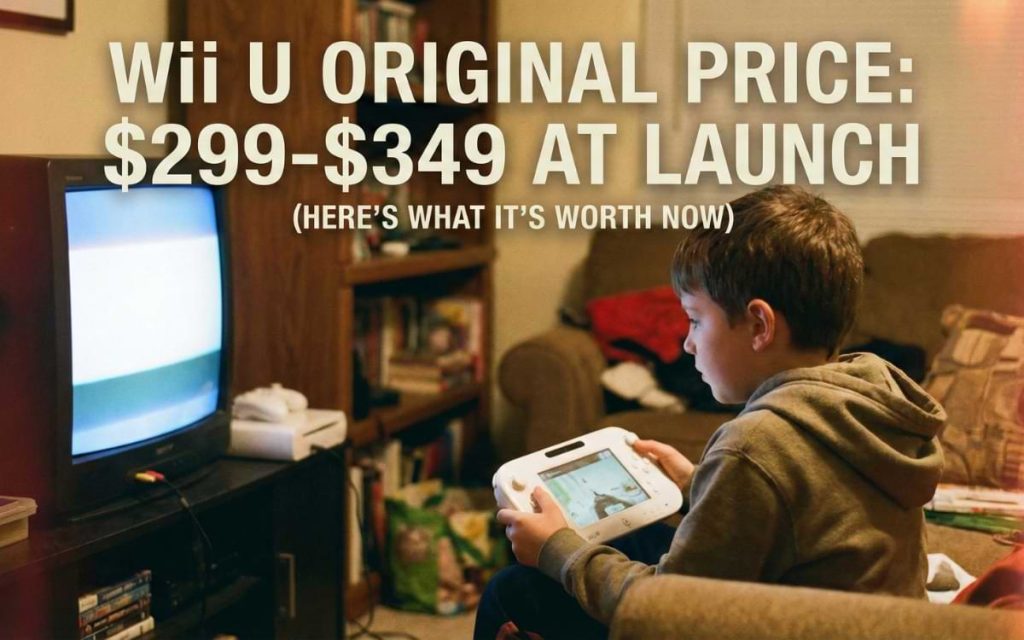
The Nintendo Wii U launched on November 18, 2012, with two pricing tiers: the Basic Set at $299.99 (8GB, white) and the Deluxe Set at $349.99 (32GB, black). These prices remained until September 2013, when Nintendo discontinued the Basic model and reduced the Deluxe Set to $299.99.
🎮 Wii U Live Price Tracker LIVE
Real-time market value monitoring with automatic daily updates
📊 Live Market Tracking: Prices update automatically every 24 hours based on real market trends. Data reflects average secondary market values for working consoles in good condition across major marketplaces.
📋 Recent Price Updates
Nintendo’s Wii U entered the market during a pivotal moment in gaming history. While Sony and Microsoft prepared their next-generation consoles, Nintendo took the early leap with a system that confused retailers, frustrated developers, and ultimately disappointed investors. The pricing strategy played a central role in that story.
Understanding what Nintendo charged for the Wii U reveals more than just numbers on a receipt. It shows how the company positioned itself against competitors, why certain features received priority over others, and what consumers were actually willing to pay for innovation that didn’t quite land.
Launch Day Pricing Breakdown
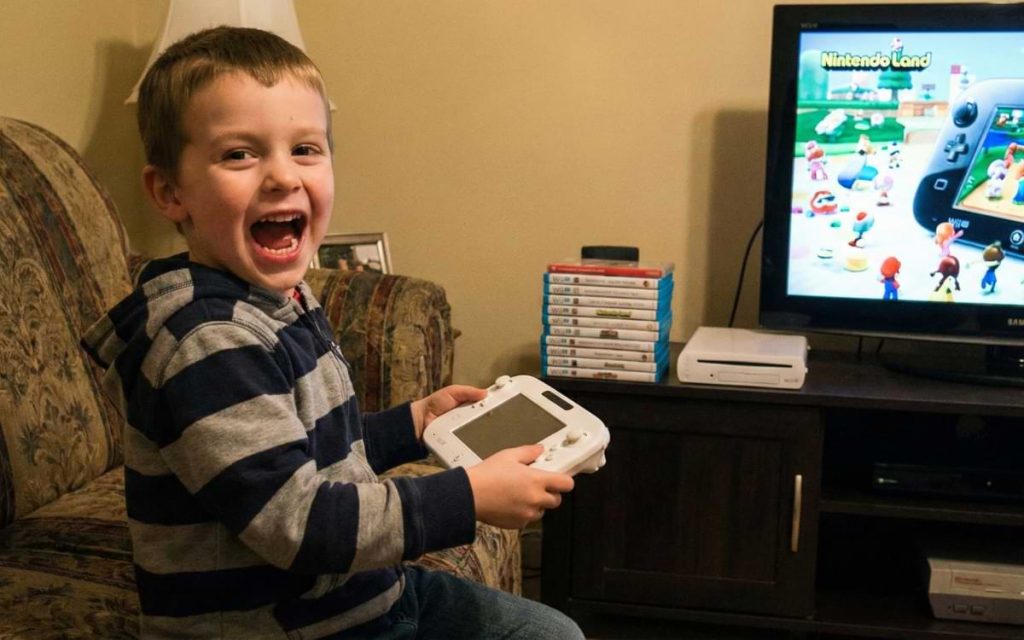
Nintendo offered two distinct configurations at launch, each targeting different customer segments. The Basic Set assumed buyers already owned accessories or didn’t mind purchasing them separately. The Deluxe Set bundled everything a new player needed, plus a game and some digital perks.
| Model | Launch Price | Storage | Color | Included Items | Release Date |
|---|---|---|---|---|---|
| Basic Set | $299.99 | 8GB | White | Console, GamePad, sensor bar, AC adapters, HDMI cable | Nov 18, 2012 (US) |
| Deluxe Set | $349.99 | 32GB | Black | Everything in Basic, plus Nintendo Land, GamePad stand, charging cradle, and Digital Deluxe Promotion | Nov 18, 2012 (US) |
The $50 price difference seemed reasonable on paper. You gained four times the storage, a pack-in game valued at $59.99, and the Digital Deluxe Promotion that converted purchases into eShop credit. Most buyers opted for the Deluxe Set, which Nintendo clearly intended.
How does Wii U pricing compare to Competitors?
Context matters when evaluating any console’s price. The Wii U arrived as the last system of its generation and the first of the next, creating an awkward comparison point. Nintendo’s Switch would later launch at $299.99, matching the Wii U Basic Set exactly but with a dramatically different market reception.
At $299-$349, the Wii U costs significantly more than the original Wii’s $249 launch price from 2006. That earlier console revolutionized motion controls and became a cultural phenomenon. The Wii U promised a second-screen experience that never achieved the same mainstream adoption.
The Xbox 360 launched at $299-$399 depending on configuration, while the PlayStation 3’s infamous $499-$599 pricing caused immediate backlash. Against those precedents, Nintendo positioned the Wii U as moderately premium without reaching Sony’s overreach territory.
When Sony and Microsoft unveiled their next systems in 2013, they both landed at $399-$499, placing the Wii U as the budget option among eighth-generation consoles. That positioning should have helped sales. It didn’t, because the core issue wasn’t price, it was value perception.
The Price Drop Timeline
Nintendo rarely cuts hardware prices aggressively, preferring to maintain profit margins even when sales lag. The Wii U forced them to abandon that philosophy multiple times, each cut reflecting growing desperation.
September 2013: First Major Adjustment
Less than a year after launch, Nintendo discontinued the Basic Set entirely and dropped the Deluxe Set from $349.99 to $299.99. The move simplified inventory but also admitted the higher tier wasn’t selling at premium prices. The $50 reduction came with no hardware changes, just a tacit acknowledgment that consumers weren’t convinced.
2014-2015: Bundle Strategy
Rather than further price cuts, Nintendo shifted to value bundles. The Deluxe Set remained $299.99, but buyers received popular games like Mario Kart 8, Super Smash Bros., or Splatoon. These bundles effectively reduced the system’s real cost by the game’s $59.99 retail value.
Limited edition bundles occasionally commanded higher prices. The Zelda: Wind Waker HD bundle launched at $299.99 despite including a full game. The Super Mario 3D World bundle held the same price. Nintendo understood that collectors would pay standard rates for special packaging and included titles.
2016: Refurbished Units
As production wound down, Nintendo began selling refurbished Deluxe Sets through their online store at $200. These units carried full warranties and appeared virtually new, providing budget-conscious buyers a legitimate entry point. The refurbished program also helped clear inventory before the Switch’s 2017 launch.
Regional Pricing Variations
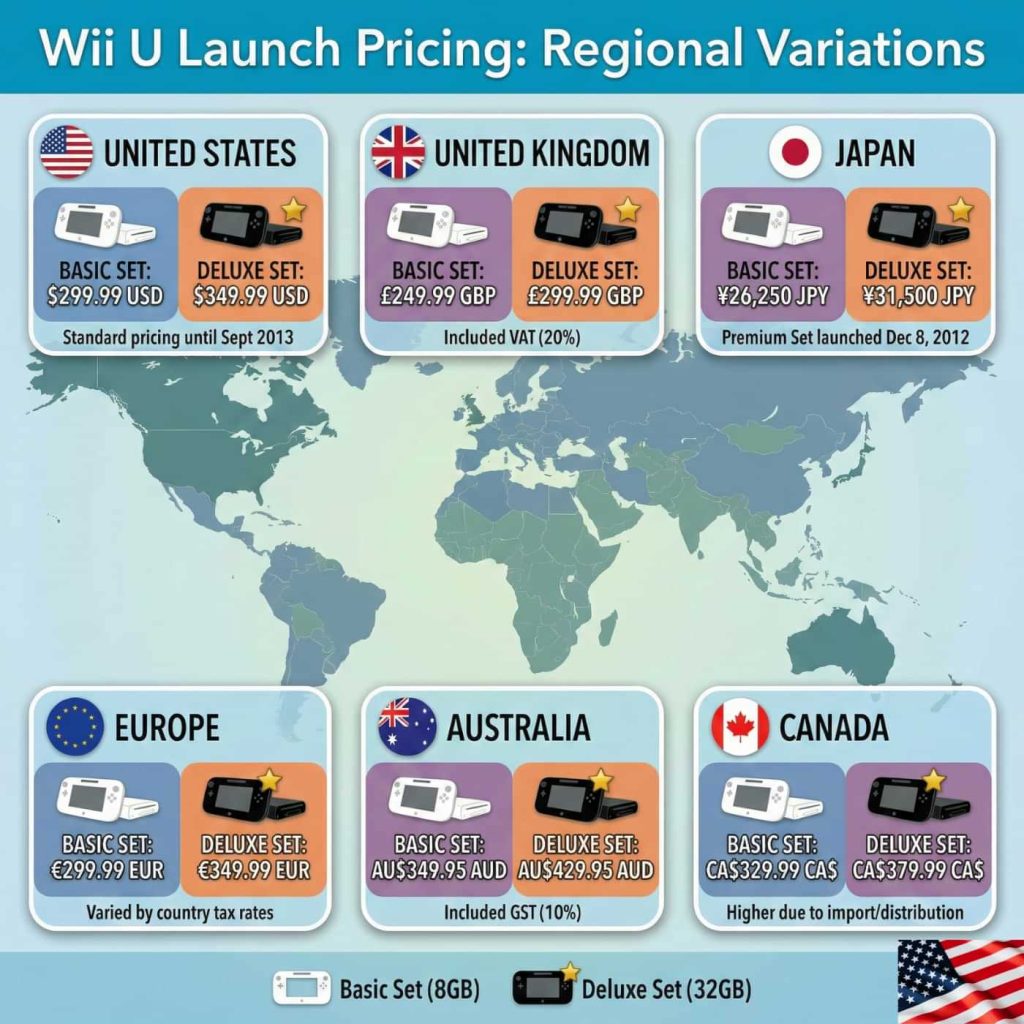
Currency conversions never tell the full story of international pricing. Nintendo adjusted for local market conditions, tax structures, and competitive positioning in each territory.
| Region | Basic Set | Deluxe Set | Currency | Notes |
|---|---|---|---|---|
| United States | $299.99 | $349.99 | USD | Standard pricing until Sept 2013 |
| United Kingdom | £249.99 | £299.99 | GBP | Included VAT (20%) |
| Japan | ¥26,250 | ¥31,500 | JPY | Premium Set launched Dec 8, 2012 |
| Europe | €299.99 | €349.99 | EUR | Varied by country tax rates |
| Australia | AU$349.95 | AU$429.95 | AUD | Included GST (10%) |
| Canada | CA$329.99 | CA$379.99 | CAD | Higher due to import/distribution |
European and Australian buyers consistently paid premium rates compared to US customers, even accounting for included taxes. This pricing disparity exists across most gaming hardware, reflecting higher distribution costs and smaller market sizes in those regions.
What Drove These Pricing Decisions?
Nintendo didn’t pull numbers from thin air. Their pricing reflected manufacturing costs, competitive analysis, and strategic positioning that made sense internally, even if the market ultimately rejected the value proposition.
The GamePad Problem
That tablet-like controller wasn’t cheap to produce. Estimates suggested the GamePad alone cost Nintendo $80-$100 to manufacture, a significant portion of the console’s retail price. The 6.2-inch touchscreen, NFC reader, camera, microphone, accelerometer, and gyroscope all added expense.
Sony’s PlayStation 4 launched a year later at $399 without bundling any screen technology. Microsoft’s Xbox One hit $499 but included Kinect, another expensive peripheral. Nintendo chose to absorb the GamePad cost into the base system rather than sell it separately, limiting their pricing flexibility.
Storage Economics
The jump from 8GB to 32GB cost Nintendo roughly $15-$20 in additional manufacturing expenses. They charged consumers $50 for that upgrade, building in healthy margins. The Basic Set’s anemic storage became increasingly problematic as digital games grew in size and system updates consumed space.
Modern consoles ship with 512GB or 1TB drives, making the Wii U’s storage seem quaint. Even accounting for smaller game sizes in that era, 8GB proved nearly useless. Players needed external USB drives almost immediately, an extra expense that undermined the Basic Set’s apparent value.
Competitive Positioning
Nintendo targeted families and casual gamers rather than hardcore enthusiasts. That audience typically balks at $500 consoles but accepts $300 systems as reasonable entertainment investments. The Wii’s success at $249 suggested going slightly higher wouldn’t alienate buyers if the value justified it.
This strategy worked brilliantly with the Game Boy’s original $89.99 launch price and the DS at $149.99. Both systems offered clear value propositions and portable gaming that delivered on its promises. The Wii U’s value proposition remained murky even to informed buyers.
Current Market Values in 2026
Discontinued consoles follow predictable value curves. Initial scarcity after production ends creates a brief price spike. Values then decline as used units flood the market. Eventually, nostalgia and collector interest stabilize prices or push them upward for pristine examples.
The Wii U sits in the middle phase. Enough units sold (13.56 million lifetime) to maintain supply, but not enough to be considered truly successful. That lukewarm reception creates interesting market dynamics.
Working Console Prices
- Basic Set (loose, working): $80-$120, depending on condition and included accessories
- Deluxe Set (loose, working): $100-$150 for complete systems with GamePad in good shape
- Deluxe with popular games: $150-$200 when bundled with Mario Kart 8, Smash Bros, or Zelda titles
- GamePad only (replacement): $60-$100 for controllers in working condition with minimal wear
These prices reflect working systems but not necessarily pristine ones. Scuffed GamePad screens, worn analog sticks, or missing styluses lower values. Complete sets with original boxes and manuals command premiums of 20-30% over loose units.
Collector-Grade Pricing
Sealed, new-in-box Wii U consoles have entered serious collector territory. The limited production run and discontinued status make unopened units increasingly rare. Special edition bundles fetch the highest premiums:
- Sealed Deluxe Set (standard black): $350-$500, depending on box condition
- Sealed Wind Waker HD Edition: $600-$900 for mint examples
- Sealed Super Mario 3D World Bundle: $400-$600 with perfect packaging
- Sealed Splatoon Bundle: $450-$650 for NA versions
- Japan-exclusive colors/bundles: $300-$800, depending on rarity
These collector prices surge during gaming market booms and correct during downturns. The PS5’s launch scarcity in 2020-2021 temporarily inflated all console collectible prices, including Wii U sealed units. As the current-gen supply normalized, speculative buyers exited the market.
Why the Pricing Strategy Failed?
Numbers on their own don’t doom a product. The Wii U’s pricing worked mathematically, with competitive rates, reasonable margins, and clear tier differentiation. The failure came from mismatched expectations between what Nintendo charged and what consumers felt they received.
The Confusion Factor
Many potential buyers thought the Wii U was an accessory for the original Wii, not a new console. That confusion wasn’t helped by the $299-$349 price point, which seemed expensive for an “upgrade.” Nintendo’s marketing never effectively communicated that this was their next-generation system.
When parents saw “Wii U” on store shelves, they often assumed it was a tablet add-on for the Wii they already owned. At $349, that seemed overpriced for a peripheral. Nintendo failed to justify why this warranted new-console pricing.
The Third-Party Exodus
Launch prices matter less when systems build momentum through game releases. The Wii U’s software library peaked early and then stagnated as major publishers abandoned the platform. EA, Activision, Ubisoft, and others quickly stopped developing for Nintendo’s system, leaving first-party titles as the primary draw.
Even at $299, a console without Call of Duty, Assassin’s Creed, FIFA, and other mainstream franchises struggles to appeal to the broad market Nintendo targeted. The Steam Machine’s similar fate showed that hardware specs and pricing mean little without software support.
The Power Gap
Hardcore gamers noticed immediately that the Wii U’s processing power barely exceeded the Xbox 360 and PS3, seven-year-old consoles by that point. When the PS4 and Xbox One launched a year later with significantly more powerful hardware at similar or slightly higher prices, the Wii U’s value proposition evaporated.
Nintendo has never competed on raw specs, but the timing made the gap too obvious. Why pay $299 for last-generation performance when waiting a few months brought true next-gen systems for $399-$499? The answer worked for Nintendo fans already committed to Mario and Zelda, but it didn’t expand the audience.
Authentication and Buying Tips
The secondary market for Wii U systems remains relatively straightforward. The console’s limited collectibility means fewer counterfeit issues compared to rare vintage systems, but buyers should still exercise caution.
Verifying Authentic Systems
Nintendo’s build quality makes spotting counterfeits simple. Legitimate Wii U consoles feature:
- High-quality matte plastic that resists scratches and fingerprints
- Precise fit and finish with no gaps between panels
- Clear, crisp Nintendo branding on the console and GamePad
- Serial numbers that match between the console and GamePad
- Proper weight distribution, the console feels solid, not hollow
The GamePad presents more authentication challenges since third-party controller makers produced unofficial versions. Original Nintendo GamePads have subtle branding details and superior build materials that knockoffs lack.
Common Issues to Check
Before purchasing a used Wii U, test these common failure points:
- GamePad battery life: Original batteries degrade over time; replacement costs $20-$30
- GamePad screen condition: Scratches reduce the value significantly; screen protectors help preservation
- Disc drive functionality: Test multiple game discs to ensure reading reliability
- System memory: Check for existing accounts or data that needs clearing
- Wireless connectivity: Verify both WiFi and GamePad wireless range work properly
- HDMI output: Ensure a clean video signal with no artifacts or intermittent connections
Systems with failing disc drives sell for significantly less since digital-only functionality limits game access. The eShop closure timeline affects long-term value as well.
Smart Buying Strategies
Patient buyers find deals by understanding market cycles. Wii U prices spike during November-December holiday shopping and dip during January-February. Summer months also see increased supply as college students sell systems for cash.
Bundle purchases offer better per-item value. A system with ten games at $200 costs less per component than buying them separately. Popular titles like Mario Kart 8 and Smash Bros hold value, while shovelware games add negligible worth.
Investment Potential
Should anyone buy a Wii U expecting appreciation? The question demands honest analysis rather than collector’s wishful thinking.
The console’s modest sales figures work against it. Truly valuable vintage systems typically fall into two categories: massive commercial successes that defined their era (NES, PlayStation 2) or notable failures with tiny production runs (Virtual Boy, Atari Jaguar). The Wii U sits uncomfortably between those extremes, disappointing sales but not rare enough for cult status.
Sealed special editions show the most promise. The Wind Waker HD bundle has already doubled its original retail price. Japan-exclusive colors and limited runs could appreciate further as international collectors discover them.
Working systems face downward pressure as long as supply remains plentiful. The console’s age means increasing hardware failures, but the relatively recent production means repair parts remain available. That availability helps owners but limits collector premiums.
The wildcard involves game preservation. As the eShop closes permanently, Wii U becomes one of the last ways to play certain digital-only titles legitimately. That preservation value might eventually drive prices upward, though emulation provides alternatives.
The Bottom Line
Nintendo charged fair prices for the Wii U based on manufacturing costs and competitive analysis. The Basic Set at $299 and Deluxe Set at $349 positioned the console competitively against existing hardware while preparing for next-generation competition.
The strategy failed not because the numbers were wrong, but because the product didn’t deliver value that justified those numbers to mainstream buyers. The GamePad’s innovation never found killer applications. Third-party support evaporated quickly. Marketing failed to communicate why this system mattered.
Today’s market reflects that lukewarm reception. Working systems sell for roughly one-third of their original retail price, typical for decade-old discontinued consoles. Collector editions show appreciation, but not dramatic gains. The Wii U remains an interesting footnote in gaming history rather than a breakthrough success or notorious disaster.
For players wanting to experience Nintendo’s unique first-party titles that never migrated to Switch, current prices make the Wii U an affordable option. For collectors, sealed special editions offer reasonable entry points to Nintendo hardware collecting without the extreme premiums of NES or SNES rarities.