
When you see a price crossed out with a lower number beside it, you’re looking at one of retail’s most powerful psychological tools. That strikethrough price suggests you’re getting a deal, but what does the “original” price actually represent?
Is it:
- The price most customers paid?
- The manufacturer’s suggestion?
- An inflated figure designed to make discounts look better?
The answer varies dramatically depending on where you shop and which regulatory requirements apply. This guide decodes the terminology, examines how major platforms handle reference pricing, and shows you how to verify whether a “deal” is genuine.
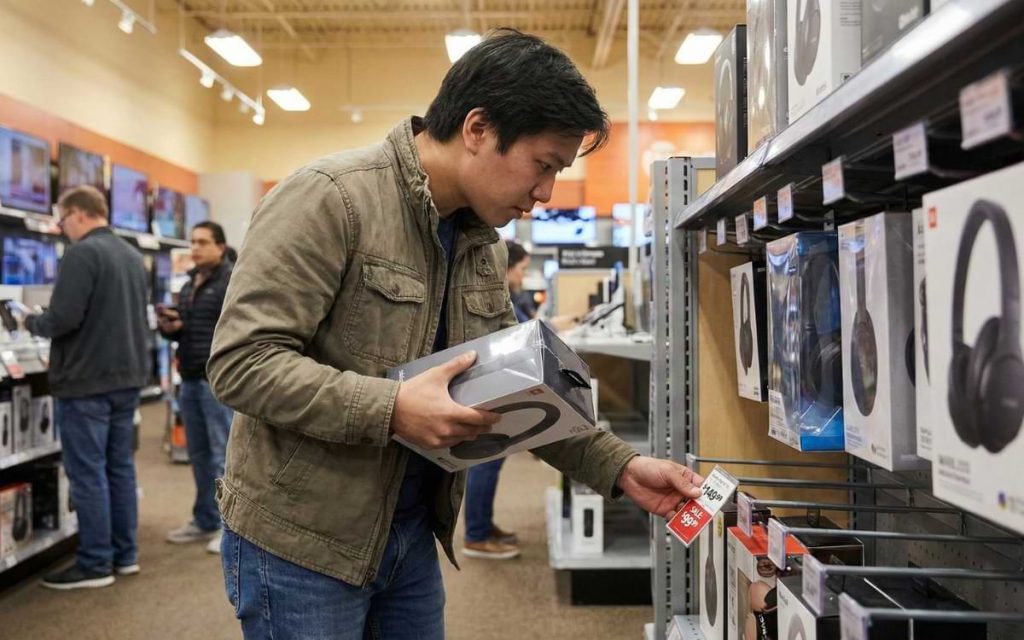
Section 1: Price Label Definitions
Understanding pricing terminology is the first step to recognizing legitimate deals from marketing tactics.
MSRP (Manufacturer’s Suggested Retail Price)
What it is:
- The price a manufacturer recommends for their product
- Also called “list price” in some contexts
- Serves as a benchmark but carries no legal requirement for retailers to honor it
In practice:
- Actual selling prices frequently fall below MSRP for electronics, appliances, and competitive categories
- Can be legitimately higher for products sold through specialized channels
- Most accurate during initial product release periods
Key consideration: MSRP reflects manufacturer positioning strategy, not necessarily what consumers actually pay in the marketplace.
List Price
Definition:
- The suggested retail price provided by a manufacturer, supplier, or the seller themselves
- Used as a reference point for displaying savings
Platform requirements:
- Major platforms like Amazon and Walmart validate list prices against recent sales history
- Must reflect actual market conditions, not arbitrary figures chosen to inflate discounts
The distinction matters: A legitimate list price should align with prices charged by multiple retailers or during recent sales periods.
Reference Price
Overview:
- Umbrella term for any comparative price point used to demonstrate savings
- Can include list prices, typical prices, or historical prices
Types of reference prices:
- MSRP/List Price – Manufacturer or supplier suggested pricing
- Previous Price – What the seller charged before
- Typical Price – Median price paid over a specific timeframe
- Competitor Price – Pricing from other retailers
Legal standard: According to FTC guidelines, reference prices must represent actual market conditions, not inflated figures created solely for comparison.
Typical Price
How it works:
- Calculated automatically using actual sales data
- Amazon defines it as the median price customers paid over the past 90 days
- Excludes limited-time promotions to reflect genuine pricing patterns
Advantages:
- More data-driven than manufacturer suggestions
- Harder to manipulate than suggested pricing
- Reflects what consumers actually paid, not theoretical benchmarks
When you’ll see it: Primarily on products with extensive sales history and consistent pricing patterns.
“Was Price”
Definition:
- Indicates what a product previously sold for on that specific platform
- Must meet platform-specific validation requirements
Walmart’s “Was Price” criteria:
- Either the 90-day median price paid by customers, OR
- The median price offered for at least 28 out of the last 90 days
- Excludes promotional periods from calculation
Why it matters: This metric attempts to reflect genuine price history rather than theoretical benchmarks, though verification requirements vary significantly by platform.
Historical Price References
Common phrases:
- “Lowest Price in 30 Days”
- “Price dropped from [X]”
- “Previously [X]”
What they mean:
- Reference recent pricing history on the platform itself
- Claims are verifiable through the retailer’s own records
- Generally reflect actual transaction data
Reliability: These tend to be more trustworthy than MSRP comparisons since they’re based on documented platform pricing.
Legal Requirements
Federal law (FTC Guides Against Deceptive Pricing):
- Any former price mentioned must have been offered honestly and in good faith
- The original higher price must have been openly and actively offered for sale
- Reference prices must not mislead consumers about savings
State-level requirements (stricter than federal):
| State | Specific Requirement |
| California | Must specify timeframes for former prices |
| Oregon | Products must be sold at regular price within 30 days preceding advertisement |
| New Jersey | Former prices must be offered for at least 28 days out of preceding 90 days |
| Massachusetts | Similar 28-day requirement |
Enforcement: Both federal and state attorneys general can pursue legal action for deceptive pricing practices, with penalties including fines and required refunds.
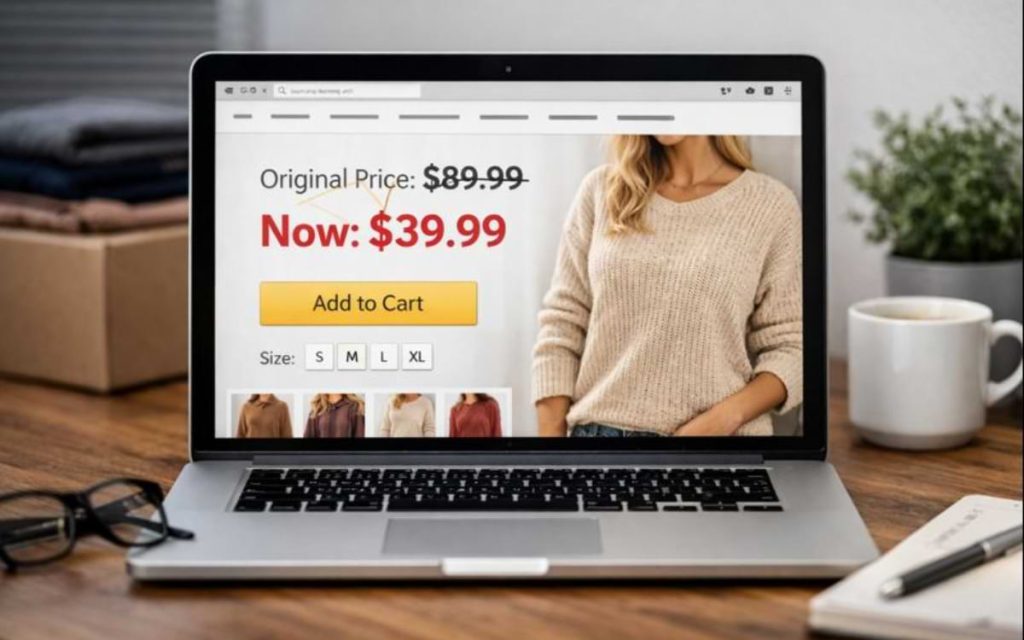
Section 2: Platform-by-Platform Breakdown
Different retailers employ vastly different approaches to reference pricing. Understanding platform-specific practices helps you evaluate deals accurately.
Amazon’s Strikethrough Pricing
Amazon employs multiple reference price types with algorithmic validation systems.
List Price Validation
Requirements for display:
- Product must have been purchased by customers on Amazon at or above that price, OR
- Other retailers must have offered it at or above that price
- Timeframe: Past 90 days for non-seasonal products, 180 days for seasonal items
Key feature: Sellers cannot manually force a strikethrough Amazon’s systems must confirm the reference price is legitimate through algorithmic validation.
Typical Price Display
When it appears:
- For products with extensive sales history
- Shows median-based calculation instead of or alongside list price
Advantage: Reflects what customers actually paid rather than suggested pricing, reducing manipulation potential.
“Lowest Price in XX Days” Badge
What it means:
- Current price matches or beats the lowest featured offer in specified timeframe (typically 30 days)
- Straightforward and verifiable through Amazon’s own records
- Generally reliable indicator of genuine price drops
Recent Policy Changes (January 2024)
New requirements as of January 31, 2024:
- Deals must display a reference price to be eligible for publication
- Reference price must reflect the price at which substantial sales were made
- Misleading discounts result in deal suppression
Impact: Increased pressure on sellers to maintain legitimate reference pricing or lose promotional visibility.
Third-Party Seller Challenges
Common issues:
- Inconsistent strikethrough application even when requirements appear met
- Algorithms consider seller’s own history PLUS competitor pricing and marketplace trends
- Creates unpredictability for merchants attempting to leverage this feature
For buyers: This means Amazon’s strikethrough pricing generally undergoes more validation than you might see on other platforms.
Walmart’s “Was” Price System
Walmart restructured its reference pricing requirements in 2022 to enhance transparency.
Core Requirements
Minimum discount threshold:
- Promotional prices must be at least 10% lower than the was price
- Prevents retailers from showing minimal discounts as significant savings
- Required for “Reduced Price” or “Clearance” flags
Was Price Calculation (two methods):
- Median customer payment over 90 days, OR
- Median price offered for at least 28 of the last 90 days
Important: Promotional periods are excluded from both calculations to prevent temporary spikes from establishing inflated baselines.
Comparison Price Methodology
What it means:
- Reference point for strikethrough pricing
- Uses either list price (MSRP) or was price
- List price only used if customers purchased at that price OR other retailers offered it at or above that price
Validation timeframe: Same 90-day window with specific availability requirements.
Strategic Implications
For brands:
- Frequent promotions can erode the was price baseline
- Requires deeper discounts in subsequent campaigns to achieve strikethrough pricing
- Makes perpetual sales strategies less effective on Walmart’s platform
For consumers: Walmart’s 10% minimum threshold means displayed discounts represent more meaningful savings than platforms without similar requirements.
Target’s Policy Evolution
Target’s pricing policies have undergone significant changes through 2025.
Price Matching Elimination (July 2025)
What changed:
- Target ended its longtime price match guarantee against competitors
- Previously allowed customers to match Amazon and Walmart prices
- Now only matches Target’s own online and in-store prices
Official reasoning:
- Guests overwhelmingly price matched Target’s own prices rather than competitor prices
- Positions Target as a price leader rather than follower
Reality check:
- Removes transparency that price matching provided to shoppers
- Aligns Target with Walmart’s store-to-online-only matching policy
- Occurred amid sales decline from $24.5B (Q1 2024) to $23.8B (Q1 2025)
What This Means for Shoppers
Before July 2025:
- Could request price matches at register against Amazon/Walmart
- Provided built-in verification of competitive pricing
After July 2025:
- Must manually compare prices across retailers before shopping
- Target’s “sales” harder to verify against market pricing
- Increased importance of using price tracking tools
Fashion Retailers’ Perpetual Sales Model
Fashion retailers employ perhaps the most controversial reference pricing practices in ecommerce.
The Perpetual Sale Problem
How it works:
- Department stores display “original” or “regular” prices that products rarely or never sell for
- Items remain “on sale” for months or even year-round
- Creates illusion of value while actual pricing remains constant
Data from legal cases:
- Kohl’s lawsuit: Analysis of 15 months of pricing data revealed over 9,000 products on sale more than half the time
- Some items perpetually on sale for 90 days out of every 90-day window
- “Original” prices often never actually charged to consumers
Major Legal Challenges
2016 Los Angeles City Attorney lawsuit:
Defendants:
- JCPenney
- Sears
- Macy’s
- Kohl’s
Allegations:
- False reference pricing schemes
- Advertised “original,” “list,” and “regular” prices never actually charged
Settlements:
- JCPenney: $50 million class action settlement
- Kohl’s: $6.5 million settlement
Why Fashion Retailers Can Get Away With It
Private label advantage:
- Fashion retailers heavily use private label or exclusive products
- Products only available at one retailer
- Consumers have no means to compare prices elsewhere
- “Regular” prices impossible to verify against market value
Example: If a dress is exclusive to Macy’s, shoppers cannot check whether the $120 “original” price is legitimate when it’s “on sale” for $59.99.
Current Legal Landscape
Recent trend:
- Class actions over false reference prices or fake discounts have doubled in the past 12 months
- Lawsuits expanding beyond largest retailers to mid-sized companies
- Increased regulatory scrutiny from state attorneys general
For consumers: Exercise extreme caution with fashion retailer discounts, especially on private label items. See Red Flags section for warning signs.
Section 3: Red Flags to Watch
Recognizing these warning signs helps you identify potentially inflated reference pricing.
Perpetual Sale Status
What to look for:
- Product displays a “sale” price every time you check
- Discount persists across weeks or months
- “Limited time” sales that never actually end
What it means:
- The “original” price likely doesn’t reflect what customers typically pay
- “Sale” price is effectively the regular price
- Reference pricing designed to create urgency rather than reflect value
Action: Use price tracking tools to verify pricing history before purchasing.
Unusual Price Gaps
Warning signs:
- Discounts claiming 50% off or more
- Product available from multiple retailers at much lower “regular” prices
- Reference price significantly higher than competitor pricing
What to check:
- Compare the advertised “regular” price against what other sellers charge
- Look for the same product on 3-4 different platforms
- Verify MSRP on manufacturer’s website if available
Reality check: Legitimate MSRPs exist, but massive discounts often indicate inflated reference prices rather than genuine savings.
Private Label Pricing
The problem:
- Exclusive or store-brand products lack external price comparisons
- Prime candidates for inflated reference pricing
- No competitive marketplace data to validate “original” prices
High-risk categories:
- Fashion retailer house brands
- Store-exclusive home goods
- Retailer-branded electronics
Protection strategy: Without external validation, treat private label “original” prices with skepticism. Focus on whether the absolute price represents good value for the product quality.
Vague Terminology
Suspicious phrases:
- “Compare at $X”
- “Value price: $X”
- “Retail price: $X” (without specifying whose retail price)
- “Estimated value: $X”
What’s missing:
- Clear definition of what the reference price represents
- Timeframe when price was active
- Validation source (manufacturer, previous sales, competitor pricing)
Legitimate alternatives:
- “Was $X” (previous selling price on this platform)
- “MSRP: $X” (manufacturer’s suggested retail price)
- “Typical price: $X” (median price over specified period)
Missing Validation Timeframes
Red flag questions:
- When was the “original” price last active?
- For how long was it offered?
- What percentage of sales occurred at that price?
Legal requirements:
- Federal guidelines: prices must be maintained for “reasonable length of time”
- California: must specify timeframes from previous 90 days
- New Jersey/Massachusetts: 28 days out of preceding 90 days
If retailers won’t specify: The reference price may be outdated or fictitious.
New Product “Sales”
Suspicious pattern:
- Product launches with immediate discount
- Higher reference price never actually charged
- “Introductory sale” on brand new items
The issue:
- Reference price may never have represented actual market pricing
- No sales history to validate the higher price point
- Discount potentially built into pricing strategy from launch
Exception: Legitimate manufacturer rebates or bundle deals on genuinely new products.
Inconsistent Pricing Across Listings
What to check:
- Same product with different “original” prices in different colors/sizes
- Varying discounts for identical items
- Reference prices that change frequently without sales changes
What it suggests:
- Inconsistent reference pricing validation
- Potential manipulation of discount perception
- Lack of standardized pricing practices
Section 4: How Price Tracking Tools Monitor This
Price tracking platforms provide transparency that individual shoppers cannot easily achieve through casual browsing.
Data Collection Methodology
Frequency:
- Multiple data points collected daily (typically 4-24 times per day)
- Captures price fluctuations across different times of day
- Builds comprehensive price histories for millions of products
Coverage:
- Tracks both direct retailer pricing and marketplace sellers
- Monitors multiple retailers simultaneously for same products
- Historical data often extends back months or years
What’s recorded:
- Actual selling price at each check
- Reference/strikethrough prices displayed
- Availability status
- Seller information (for marketplaces)
Pattern Recognition Capabilities
Perpetual sales detection:
- Identifies items consistently “on sale” for 80%+ of tracked time
- Flags reference prices that never or rarely match actual selling prices
- Highlights suspicious discount patterns
Price cycling identification:
- Recognizes products that oscillate between two prices
- Example: $50 → $60 → $50 repeatedly while showing $100 “original” price
- Reveals artificial pricing patterns designed to maintain discount appearance
Seasonal pattern analysis:
- Distinguishes legitimate seasonal pricing from manipulation
- Identifies genuine clearance cycles vs. perpetual “clearance” pricing
Validation Against Multiple Sources
Cross-platform comparison:
- Compares pricing across retailers simultaneously
- Identifies when one retailer’s “original” price significantly exceeds competitors
- Validates MSRP claims against manufacturer and competitor pricing
Market context:
- Determines whether reference prices align with broader market
- Flags outlier pricing that doesn’t match competitive landscape
- Provides relative value assessment
Historical Context Provision
Long-term trending:
- Shows whether current prices represent genuine discounts
- Identifies typical price ranges over months or years
- Reveals seasonal pricing patterns
Best price alerts:
- Notifies users when prices hit historical lows
- Distinguishes between minor fluctuations and significant deals
- Provides context for evaluating “limited time” offers
Reporting Capabilities
What tracking tools reveal:
- Highest price: Peak pricing over tracking period
- Lowest price: Bottom pricing over tracking period
- Average price: Mean price over time
- Current vs. average: Whether current pricing is above or below typical
- Discount frequency: How often product is actually “on sale”
Example visualization: A price tracker might show:
- Product currently: $79.99
- “Original” price displayed: $149.99
- Actual highest price in past year: $89.99
- Average price: $82.50
- On “sale” status: 87% of past 90 days
Conclusion: The $149.99 reference price is inflated; $79.99 represents typical pricing, not a deal.
Section 5: Tips for Verification
Practical strategies for consumers to verify pricing claims and identify genuine deals.
Use Browser Extensions and Price Trackers
Top tools by platform:
Amazon-specific:
- CamelCamelCamel – Free, comprehensive Amazon price history
- Keepa – Enhanced tracking with detailed charts and alerts
- Shows price charts directly on product pages
Multi-platform:
- Honey – Tracks prices across multiple retailers, applies coupon codes
- PriceBlink – Compares prices across stores in real-time
- Invisible Hand – Alerts to better prices at competing retailers
How to use:
- Install browser extension
- Visit product page
- View automatic price history overlay
- Set alerts for price drops
What to look for:
- Current price relative to average
- Price volatility and patterns
- Frequency of “sales”
- Historical price range
Check Multiple Retailers
Systematic comparison process:
- Open 3-4 competitor tabs:
- Amazon
- Walmart
- Target
- Specialized retailers for category
- Compare “regular” prices:
- Do competitors show similar MSRPs?
- Are sale prices comparable?
- Is one retailer’s discount dramatically larger?
- Red flag evaluation:
- One retailer shows 50% off while others show 10-15% off → Suspect inflated reference price
- All retailers show similar pricing → Likely legitimate market pricing
Pro tip: Use manufacturer’s website to verify actual MSRP if available.
Review Marketplace Data
For Amazon specifically:
Check multiple seller types:
- Amazon direct pricing
- Third-party FBA (Fulfilled by Amazon)
- Third-party FBM (Fulfilled by Merchant)
What variations reveal:
- Wide price ranges suggest competitive pricing rather than fixed MSRP
- Consistent pricing across sellers validates reference prices
- Significant undercutting of “original” price indicates inflated reference
Other marketplaces:
- eBay sold listings (actual transaction prices)
- Walmart Marketplace seller pricing
- Google Shopping price comparisons
Examine Product Availability
Exclusivity check:
High risk:
- Product sold exclusively by one retailer
- Store brand or private label
- “Exclusive” collections or collaborations
Lower risk:
- Product widely available across retailers
- National brands with consistent MSRP
- Manufacturer-authorized pricing
Why it matters: Exclusive products lack external validation, making reference prices more susceptible to inflation. You’re forced to trust the seller’s claim without independent verification.
Screenshot Price History
Legal precedent:
- Courts have accepted consumer price tracking as evidence of deceptive pricing
- Personal documentation can support complaints or refund requests
Best practices:
- Screenshot product page including price and date
- Capture multiple dates showing price consistency
- Include URL in screenshot
- Save to organized folder by retailer
Practical uses:
- Supporting warranty claims
- Price protection requests
- Regulatory complaints
- Personal purchase timing decisions
Read Product Reviews
What to look for in reviews:
Pricing mentions:
- “This has been on ‘sale’ for months”
- “The regular price is never actually charged”
- “Better deal at [competitor]”
- “Price dropped right after I bought it”
Review analysis tips:
- Sort by “most recent” to see current pricing patterns
- Search reviews for keywords: “price,” “sale,” “deal,” “discount”
- Look for date patterns in price complaints
Crowd sourced verification: Customer experiences provide real-world validation of pricing practices.
Understand Platform Policies
Key policy knowledge for major platforms:
Amazon:
- Sellers must provide recent data validating list prices
- Cannot inflate list prices
- Reference prices must reflect actual sales at or above that price within validation period
Walmart:
- Promotional prices must be at least 10% below was prices
- Was price based on 90-day median with specific availability requirements
Target:
- No longer offers competitor price matching (as of July 2025)
- Only matches own online-to-store pricing
Why this matters: Understanding policies helps you recognize when displayed pricing may violate platform standards and warrants reporting.
Report Suspicious Pricing
How to report by platform:
Amazon:
- Click product page → “Report incorrect product information”
- Select pricing issue category
- Provide details about inflated reference price
Walmart:
- Contact customer service via chat or phone
- Reference specific product and pricing claim
- Request investigation
eBay:
- Report item → “Listing practices” → “Misleading price”
Platform incentives:
- Individual reports may not trigger immediate action
- Patterns of complaints prompt platform investigation
- Helps improve marketplace integrity for all shoppers
Consider Seasonal Timing
Legitimate seasonal price variations:
Winter coats:
- High reference prices in fall/winter (peak season)
- Deep discounts in spring/summer (clearance)
Swimsuits:
- High reference prices in spring/summer
- Steep discounts in fall/winter
Holiday items:
- Premium pricing before holidays
- Clearance pricing immediately after
School supplies:
- Higher pricing in August/September
- Lower pricing rest of year
Evaluation tip: Seasonal discounts are expected and legitimate. Off-season “original” prices often represent genuine peak-season pricing. Focus skepticism on products without clear seasonal patterns showing perpetual “sales.”
Section 6: Recent Regulatory Developments
Increased regulatory scrutiny is reshaping retail pricing practices in 2024-2025.
FTC Fee Transparency Rule (May 2025)
Official name: Rule on Unfair or Deceptive Fees
Key provisions:
- Prohibits bait-and-switch pricing
- Mandates total price disclosure upfront
- Specifically targets live-event ticketing and short-term lodging
Broader implications:
- Signals increased regulatory attention to pricing transparency
- May extend to additional industries in future rulemaking
- Establishes precedent for total-cost disclosure requirements
Impact on ecommerce: While currently limited to specific industries, demonstrates FTC willingness to enforce against deceptive pricing practices.
State-Level Fee Ban Legislation
States with new fee transparency laws:
| State | Effective Date | Key Requirement |
| California | July 2024 | Display total prices including mandatory fees upfront |
| Minnesota | 2024 | Similar fee disclosure requirements |
| Massachusetts | 2024 | Mandatory total price transparency |
Common provisions:
- “Drip pricing” prohibited (gradually revealing fees during checkout)
- All mandatory fees must be included in advertised price
- Optional fees clearly distinguished from mandatory charges
Why this matters for reference pricing: Enhanced fee transparency laws create precedent for broader pricing accuracy requirements, potentially extending to reference pricing practices.
New York Algorithmic Pricing Disclosure Act (May 2025)
First state-level algorithmic pricing regulation
Requirements:
- Retailers using personalized algorithmic pricing must disclose this practice
- Disclosure required when prices are set using consumer personal data
- Applies to dynamic pricing based on user behavior, demographics, or purchase history
Significance:
- Addresses emerging practice of AI-enabled price discrimination
- Recognizes algorithmic pricing as distinct regulatory concern
- May influence federal legislation on AI pricing practices
Consumer protection angle: Prevents “hidden” personalized pricing that shows different users different prices without transparency.
FTC v. Instacart Settlement (December 2025)
Case details:
- FTC sued Instacart for deceptive practices including misleading pricing
- Algorithmic pricing experiments led to price disparities up to 23% higher for some users
- $60 million settlement reached
Key findings:
- Consumer protection laws apply to AI-enabled pricing systems
- Platforms cannot use algorithms to discriminate in pricing without disclosure
- Historical pricing practices don’t exempt companies from transparency requirements
Precedent established: Algorithmic price optimization subject to same deceptive pricing standards as traditional pricing methods.
Increased Class Action Activity
Recent trend:
- Class actions over false reference prices or fake discounts have doubled in past 12 months
- Targets expanding beyond department stores to various retail categories
Recent defendants:
- Shade Store (March 2025) – alleged inflated “list prices”
- Full Beauty Brands – perpetual sale allegations
- Various fashion retailers continuing 2016-era legal challenges
Settlement ranges:
- Individual settlements: $2-10 million
- Major department store settlements: $6.5-50 million
Impact: Financial risk of deceptive pricing practices increasing significantly, pressuring retailers toward more conservative reference pricing.
State Attorneys General Investigations
Active enforcement areas:
- Fashion retailer perpetual sales
- Private label reference pricing
- “Compare at” pricing without validation
- Algorithmic pricing discrimination
Notable investigations:
- California AG ongoing investigations into multiple retailers
- New York AG scrutiny of online marketplace pricing practices
Trend: State-level enforcement increasingly supplements federal FTC actions, creating multi-jurisdictional compliance pressure.