
A Schwinn Black Phantom typically sells for $800 to $2,500 in the current collector market. Original paint examples in excellent condition command $1,500 to $3,000, while fully restored museum-quality specimens can exceed $5,000. Project bikes requiring restoration generally trade between $400 and $800. The 1995 anniversary reproduction sells for $300 to $700 out of the box, or $1,000 to $1,500 new in original packaging.
Understanding Black Phantom Values
The Schwinn Black Phantom represents the pinnacle of postwar American bicycle manufacturing. Produced from 1949 to 1959, this heavyweight cruiser emerged as Arnold, Schwinn and Company’s flagship model during the suburban baby boom era. With its distinctive cantilever frame, chrome-trimmed horn tank, springer fork with Cyclelock mechanism, and genuine leather saddle, the Phantom defined what a premium bicycle could be.
Today, these bicycles have transcended their original purpose to become coveted collector items. Market values fluctuate based on condition, originality, and the specific production year. Understanding these factors helps both buyers and sellers navigate fair transactions in a market where asking prices can vary dramatically from actual sale values.
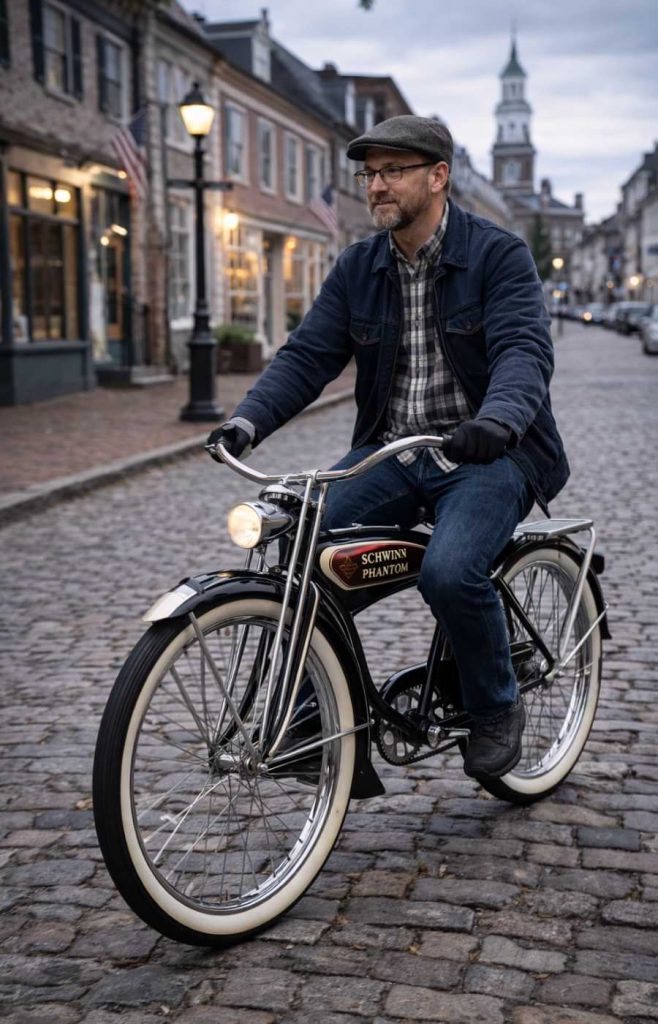
Current Market Pricing Overview
The vintage bicycle collector market has experienced notable shifts since 2024. Industry experts at Copake Auction, one of the premier bicycle auction houses in North America, have observed that balloon-tire bicycles remain desirable but face pricing pressure as collector demographics evolve. Despite this, the Black Phantom maintains its status as the most recognized and sought-after postwar Schwinn model.
2025-2026 Market Value Ranges by Condition
| Condition Grade | Price Range | Description |
|---|---|---|
| Museum Quality | $3,000 – $5,000+ | Exceptional original paint, all correct components, matching dates, complete accessories |
| Excellent Original | $1,500 – $2,600 | Original paint with honest patina, complete correct parts, minor wear consistent with age |
| Good Original or Correct | $800 – $1,200 | Complete bicycle with period-correct replacement parts, presentable condition, rides well |
| Fair or Needs Work | $500 – $800 | Complete but showing significant wear, amateur restoration, or cosmetic issues |
| Project or Parts Bike | $300 – $500 | Incomplete, heavy rust, missing critical components, requires full restoration |
Verified Recent Sales and Auction Results
Tracking actual completed sales provides more accurate market insight than asking prices, which often remain inflated on online marketplaces. The following data reflects verified transactions from major auction houses and collector community platforms through early 2026.
Notable Sales: 2024-2026
| Item | Sale Price | Venue | Date |
|---|---|---|---|
| Whizzer Black Phantom (motorized) | $5,600 | Bring a Trailer | December 2024 |
| Whizzer Black Phantom | $4,800 | RM Sotheby’s | October 2024 |
| 1952 Original Red Phantom | $2,600 | The CABE (private sale) | 2025 |
| 1950 Black Phantom (original paint) | $1,050 | The CABE (private sale) | 2025 |
| 1950s Phantom (older restoration) | $450 – $750 | Various auctions | 2024-2025 |
Market Insight: Collector forums consistently report that sellers asking $2,500 or more for standard Black Phantoms frequently need to reduce prices before finding buyers. The sweet spot for quick sales appears to fall between $800 and $1,200 for complete, presentable examples. Motorized Whizzer versions command significant premiums due to their added mechanical interest and rarity.
Production Years and Value Considerations
Schwinn manufactured the Phantom from 1949 through 1959, with the model evolving subtly throughout its production run. While year-specific premiums exist, condition and originality typically outweigh production date in determining value.
First Year Production: 1949
The inaugural 1949 models carry modest premiums among serious collectors, though determining the true production year requires careful serial number analysis. These early examples featured the full complement of deluxe features that defined the model. An original 1949 example in excellent condition might command 10 to 15 percent above comparable later models.
Peak Production: 1950-1955
The early to mid-1950s represent the core production years, and these bicycles comprise the majority of surviving examples. The original manufacturer’s suggested retail price during this period was $89.95, equivalent to approximately $1,100 in 2026 dollars when adjusted for inflation. These bicycles offered remarkable value for their era, featuring premium components that justified their flagship status.
Final Years: 1956-1959
As the decade progressed, Schwinn began simplifying production. The forebrake, initially a standard feature, became an optional upgrade as cost pressures mounted. Late-production Phantoms without the drum brake sell for slightly less than complete earlier examples, though the difference typically amounts to $100 to $200 rather than dramatic price gaps.
Color Variants and Rarity Premiums
Schwinn offered the Phantom in several color combinations throughout production. While the iconic black with red trim remains most recognized, other finishes occasionally command premiums based on relative scarcity.
| Color Combination | Relative Availability | Price Impact |
|---|---|---|
| Black with red trim | Most common | Baseline market value |
| Red with black trim | Common | Comparable to black |
| Coach Green with black trim | Less common | Modest premium (5-15%) |
| Two-tone blue (girls model) | Rare | Premium of 15-25% to right buyer |
The 1995 Centennial Anniversary Reproduction
To commemorate their 100th anniversary, Schwinn produced a limited run of 5,000 reproduction Black Phantoms in 1995. These American-made bicycles were hand-assembled using tooling created specifically for the project, with an original retail price of $2,999. The reproduction faithfully recreated the classic design, including the springer fork with Cyclelock, horn tank, Persons leather saddle, and chrome fenders.
1995 Reproduction Current Values
| Condition | 2025-2026 Value Range |
|---|---|
| New in original unopened box | $1,000 – $1,500 |
| Assembled, excellent condition | $500 – $900 |
| Used, showing wear | $250 – $400 |
These reproductions trade below their original retail price in the current market. Collectors generally prioritize original vintage examples over reproductions, though the anniversary models remain attractive as display pieces or riders for enthusiasts who prefer not to subject a valuable original to regular use.
Individual Component Values
Phantom components carry significant individual value in the replacement parts market. Restorers seeking correct pieces for their projects drive demand, and original parts in good condition can be difficult to source. When parted out, a complete Phantom often yields more than its whole-bike value, though this approach reduces the overall supply of complete bicycles.
| Component | Original | Reproduction |
|---|---|---|
| Horn tank (complete with internals) | $200 – $350 | $100 – $150 |
| Locking springer fork with Cyclelock | $175 – $350 | $100 – $175 |
| Persons leather saddle (correct style) | $125 – $225 | $80 – $125 |
| Chrome fender set with built-in light | $125 – $250 | $80 – $125 |
| Cantilever frame with correct badge | $110 – $200 | N/A |
| S-2 wheel set with double-knurled rims | $80 – $150 | $60 – $100 |
| Rear carrier with taillight | $40 – $100 | $30 – $50 |
| Chainguard (correct paint) | $45 – $100 | $30 – $50 |
Restoration Costs and Investment Analysis
Professional restoration of a Black Phantom requires significant investment. Experienced restorers consistently advise that purchasing a decent original often costs less than restoring a rough example to comparable condition. This economic reality shapes buying decisions for collectors operating with fixed budgets.
- Professional repaint with correct pinstripes and scalloping: $500 to $1,500
- Complete chrome replating (fenders, rims, accessories): $800 to $2,000
- Replacement parts (as needed): $500 to $1,500
- Professional assembly and mechanical work: $200 to $400
- Total professional restoration estimate: $2,000 to $5,400
Given these costs, a project bike purchased at $400 could require $2,500 or more to reach excellent condition, resulting in a total investment of $2,900 to $3,000 or higher. Meanwhile, a comparable original-paint example in good condition might trade at $1,200 to $1,500. Restoration typically makes economic sense only for bicycles with family significance or when the process itself provides personal satisfaction beyond financial return.
Authentication and Dating Methods
Verifying authenticity protects buyers from overpaying for misrepresented bicycles. While the 1948 factory fire destroyed early production records, decades of collector documentation have established reliable dating methods for postwar Schwinns.
Serial Number Location
Phantoms produced before 1952 carry serial numbers stamped on the bottom bracket, viewable by turning the bicycle upside down. From 1952 through the end of production, numbers appear on the left rear dropout near the brake arm. Online serial number databases can provide approximate manufacture dates, though these represent when the frame was stamped rather than the complete bicycle’s assembly date.
Key Authenticity Indicators
- Electro-forged frame seam: Visible on bottom bracket shell, indicates postwar manufacture
- Schwinn-specific S-2 rims: Feature a distinctive knurling pattern down the center
- Factory pinstripes: Original hand-applied stripes have a characteristic appearance versus reproductions
- Head badge style: The design evolved throughout the 1950s, which can help date the bicycle
- Component date codes: Hubs and cranks often carry date stamps that should align with the frame date
Where to Buy and Sell
The vintage bicycle market operates through several channels, each offering different advantages for buyers and sellers.
Collector Community Platforms
The Classic and Antique Bicycle Exchange, known as The CABE (thecabe.com), serves as the primary online community for vintage bicycle enthusiasts. Active for-sale listings and completed sale archives provide current market pricing data. Transactions between established members often proceed smoothly, with community reputation providing accountability that general marketplaces lack.
Online Marketplaces
eBay remains the largest venue for vintage bicycle sales, offering broad buyer exposure but variable pricing. Completed listing searches reveal actual sale prices rather than optimistic asking amounts. Local marketplaces, including Facebook Marketplace and Craigslist,t occasionally yield deals from sellers unaware of collector value, though these require vigilance to identify misrepresented items.
Specialty Auctions
Copake Auction in New York conducts respected annual bicycle auctions attracting serious collectors. Results establish benchmark prices for exceptional examples. Regional estate auctions occasionally include vintage bicycles, sometimes at prices below collector market values when bidder competition remains light.
Sources and References
- The Classic and Antique Bicycle Exchange (thecabe.com) – Active marketplace and forum data, 2024-2026
- BikeHistory.org – Historical Schwinn catalog documentation and serial number references
- Copake Auction – Annual bicycle auction results
- RM Sotheby’s and Bring a Trailer – Verified auction results for motorized variants
- Vintage American Bicycles – Technical documentation and dating information
- National Bicycle History Archive of America – Original specifications and MSRP data