
The McLaren 570S had a base MSRP starting at $184,900 when it launched, rising to roughly $191,500 by its final production year. The McLaren 720S opened at $284,745 and climbed to $305,000 before being replaced by the 750S.
Both models sit at the core of McLaren’s modern supercar identity. The 570S served as the gateway into the brand’s carbon-fiber lineup, while the 720S delivered Super Series performance that embarrassed cars costing twice as much. Knowing what these cars cost new is critical for anyone shopping the used market, tracking depreciation, or simply understanding where McLaren positioned itself against Ferrari, Lamborghini, and Porsche.
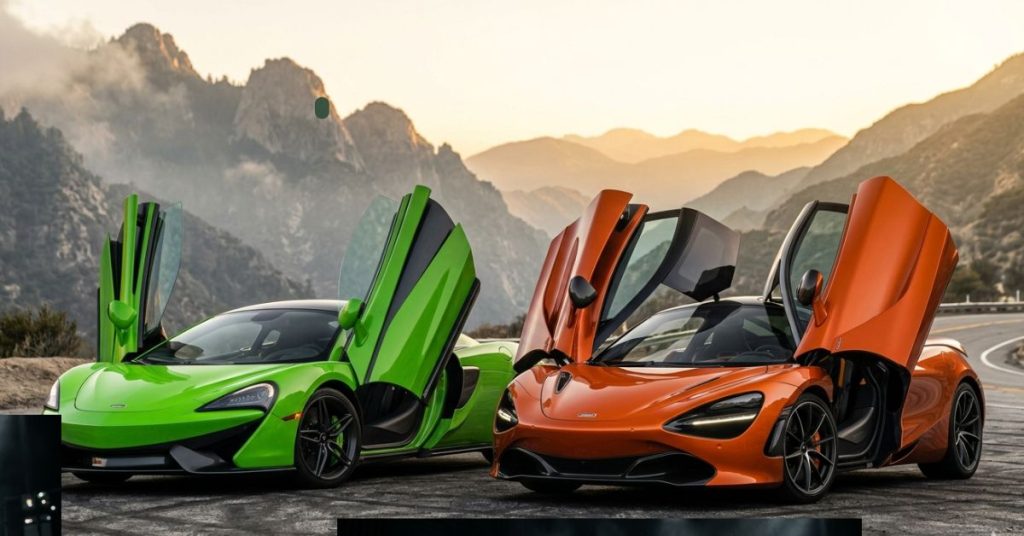
McLaren 570S Original MSRP by Model Year
McLaren unveiled the 570S at the New York Auto Show and began deliveries for the initial model year. The car was powered by a 3.8-liter twin-turbocharged V8 producing 562 horsepower, mated to a seven-speed dual-clutch gearbox. Rear-wheel drive, a carbon-fiber MonoCell II chassis, and a dry weight under 3,000 pounds made it one of the lightest cars in its segment.
Pricing stayed relatively flat across the production run, with modest annual increases reflecting option package adjustments rather than major mechanical changes.
| Model Year | Coupe Base MSRP | Spider Base MSRP | Notes |
| 2016 | $184,900 | N/A | Launch year |
| 2017 | $188,600 | $208,800 | Spider introduced |
| 2018 | $192,500 | $208,800 | Design Editions released |
| 2019 | $192,500 | $208,800 | 600LT variant launched |
| 2020 | $192,500 | $208,800 | Final full production year |
| 2021 | $191,500 | $211,500 | Limited availability, end of run |
These figures represent the manufacturer’s suggested retail price before destination charges, taxes, and options. A well-optioned 570S with the Luxury Pack, carbon-fiber exterior package, sport exhaust, and MSO paint could push window sticker totals past $220,000 without much effort.
McLaren 570S MSRP in Canada
Canadian pricing for the 570S started around CAD $240,000 for the base coupe. The Spider commanded closer to CAD $265,000. MSO-commissioned special editions, like the Canada Commission Spider, carried MSRPs above CAD $368,000. Canadian buyers also face provincial sales tax, the federal luxury tax on vehicles over $100,000, and generally longer wait times compared to U.S. buyers. The secondary market in Canada has historically held tighter to original pricing due to lower inventory and strong demand in cities like Vancouver and Toronto.
Where 570S Prices Sit on the Resale Market?
Depreciation has been significant. The average resale price for a 570S now hovers around $130,000 to $140,000 depending on mileage and condition, according to aggregated auction and dealer listing data. That represents roughly 30% depreciation from the original coupe MSRP on lower-mileage examples, and steeper drops on cars with more than 25,000 miles. Spider variants hold slightly better residual value due to lower production numbers and the appeal of open-top driving. Anyone comparing supercar depreciation curves should look at how the original Shelby Cobra’s values moved in the opposite direction, appreciating over decades as collectible demand outstripped supply.
McLaren 720S Original MSRP by Model Year
The 720S replaced the 650S and debuted at the Geneva Motor Show. It brought a new 4.0-liter twin-turbocharged V8 producing 710 horsepower, paired with a carbon-fiber MonoCage II chassis that was both lighter and stiffer than anything in the previous Super Series. The car hit 0-60 mph in 2.8 seconds and topped out at 212 mph.
McLaren offered three trim levels (Standard, Performance, and Luxury) plus the Spider convertible starting from the second year of production.
| Model Year | Coupe Base MSRP | Spider Base MSRP | Notes |
| 2018 | $284,745 | N/A | Launch year, coupe only |
| 2019 | $284,745 | $315,000 | Spider + Track Pack added |
| 2020 | $299,000 | $327,130 | Le Mans edition released |
| 2021 | $299,000 | $327,130 | Steady pricing |
| 2022 | $299,000 | $322,790 | 765LT variants available |
| 2023 | $305,000 | $321,000 | Final year before 750S |
The Performance and Luxury trims added $15,000 to $20,000 over the base price. The Track Pack, at around $28,000, bundled carbon-fiber racing seats, a sport exhaust, track telemetry, and lightweight wheels into a package that would cost far more if ordered individually. Fully loaded 720S Performance models with MSO options routinely cleared $380,000 to $400,000 on the window sticker.
720S Resale Values and Market Position
The 720S resale market currently averages around $240,000 to $250,000 for a well-maintained example. Early coupes from the first model year with higher mileage can dip below $200,000, while late-production Performance models with low mileage trade closer to $280,000. The 720S has held its value slightly better in percentage terms than the 570S, partly because of its higher performance ceiling and stronger collector interest.
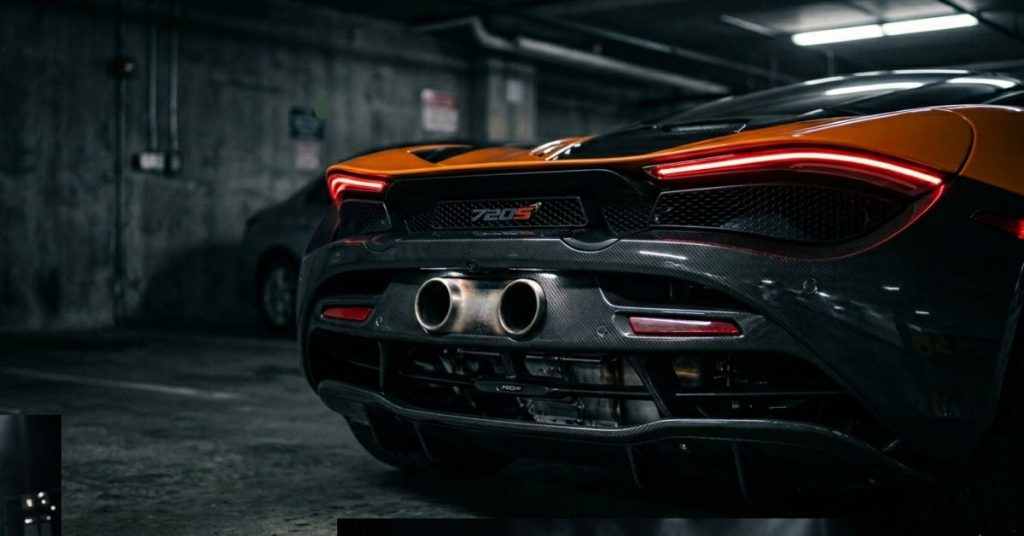
570S vs. 720S: Price, Performance, and Value Breakdown
These two cars occupied very different positions in the McLaren hierarchy, and the pricing reflected that gap clearly.
| Specification | 570S | 720S |
| Engine | 3.8L Twin-Turbo V8 | 4.0L Twin-Turbo V8 |
| Horsepower | 562 hp | 710 hp |
| 0-60 mph | 3.2 seconds | 2.8 seconds |
| Top Speed | 204 mph | 212 mph |
| Dry Weight | 2,989 lbs | 2,828 lbs |
| Base MSRP (Launch) | $184,900 | $284,745 |
| Avg. Resale Price | ~$135,000 | ~$245,000 |
| Production Run | 2015-2021 | 2017-2023 |
The roughly $100,000 gap between entry MSRPs bought a massive jump in performance. The 720S packed 148 more horsepower, shaved 0.4 seconds off the 0-60 sprint, weighed less, and used a more advanced chassis. For context, the Tesla Cybertruck pricing structure shows how a $100,000 window can span entirely different capability tiers in the modern vehicle market.
What Influenced McLaren’s Pricing Strategy?
McLaren built the Sports Series specifically to compete with the Porsche 911 Turbo S, Ferrari 488 GTB, and Audi R8. The 570S needed to undercut those cars on price while matching or beating them on performance metrics. That meant keeping the base MSRP below $190,000 at launch, a number that felt aggressive for a carbon-fiber mid-engine supercar.
The 720S played a different game entirely, going head-to-head with the Ferrari 812 Superfast, Lamborghini Aventador, and Ford GT. McLaren positioned the $285,000 entry point as a relative bargain for the performance on offer, and for a car that could embarrass vehicles costing twice as much on track, the math worked.
Both models benefited from McLaren’s vertically integrated manufacturing at the Technology Centre in Woking, England. The company builds every car on a single production line, which keeps overhead lower than competitors running multiple platforms. That efficiency translated into competitive pricing that punched well above its weight.
Option Packages and How They Affected the Sticker Price?
The base MSRP tells only part of the story. McLaren’s configurator made it dangerously easy to add five or six figures’ worth of options. The most popular packages included the Luxury Pack (power seats, Bowers & Wilkins audio, soft-close doors) at around $6,500 to $7,400, the Carbon Fibre Exterior Package at $5,000 to $10,790, and the Sport Exhaust at roughly $3,000 to $6,300 depending on the model. MSO (McLaren Special Operations) paint finishes could add $10,000 or more for bespoke colors.
On the 720S, the Track Pack at $28,000 was a strong value proposition that bundled performance features together. Carbon-fiber racing seats alone would have cost close to that if ordered separately. MSO Heritage and Le Mans special editions pushed pricing into ultra-exclusive territory, with some examples carrying MSRPs above $350,000.
Depreciation Trends and Buying Opportunities
The 570S has depreciated approximately 27% to 35% from its original MSRP across most model years, making it one of the more accessible ways to enter the McLaren ownership experience. Low-mileage coupes from the initial production year now trade in the $110,000 to $125,000 range, while Spiders command a premium of $10,000 to $20,000 over equivalent coupes. The 720S shows a flatter depreciation curve at around 15% to 20% for later models, though early examples with higher mileage have seen steeper drops. For buyers cross-shopping different supercar segments, the depreciation story here looks quite different from ROX car pricing in emerging markets, where supply constraints keep resale values artificially high.
Special editions and low-production variants buck the general trend. The MSO X (limited to ten units based on the 570S GT4 race car), the 720S Le Mans edition, and the 765LT have either held their value or appreciated. Rarity drives collector premiums in this segment, and McLaren’s habit of producing small-batch specials gives long-term holders some upside potential.
The 750S Successor and What It Means for 720S Values?
McLaren replaced the 720S with the 750S, which serves as the brand’s final model powered exclusively by an internal combustion engine before the lineup transitions toward hybrid and electric architectures. The 750S carries a base MSRP above $300,000 and delivers 740 horsepower from an evolved version of the same 4.0-liter V8.
That transition has interesting implications for 720S values. As the last of a particular era in McLaren’s history, the 720S could see renewed collector interest over time, particularly the Performance and Spider variants. According to Car and Driver, the 720S remains one of the most critically acclaimed supercars of the past decade, a reputation that tends to support long-term residual values in the collector market.
Ownership Costs Beyond the Purchase Price
MSRP is just the entry ticket. Annual insurance for a 570S typically runs between $3,000 and $6,000, depending on driving record and location. The 720S commands higher premiums, often $5,000 to $9,000 annually. Scheduled maintenance follows McLaren’s service intervals and runs roughly $1,500 to $3,000 per visit for standard services. Major services involving brake fluid changes, gearbox fluid, and full inspections can push past $5,000.
Tires are another high cost. Both cars run staggered setups with wider rears, and a full set of Pirelli P Zero tires runs $1,800 to $2,500 installed. Carbon-ceramic brake rotors are standard on both models, which is good news for track-day enthusiasts but means replacement costs north of $10,000 when they eventually wear out.