
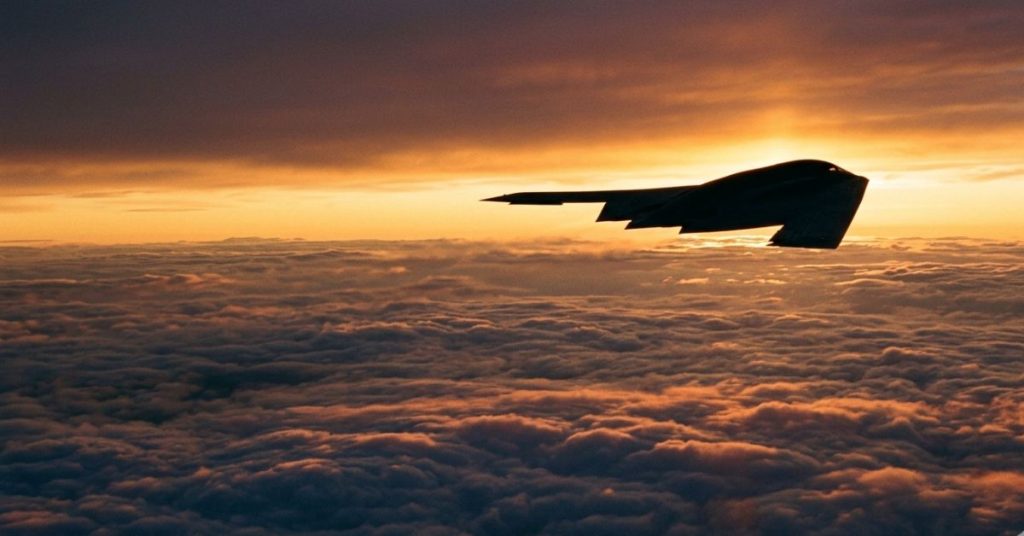
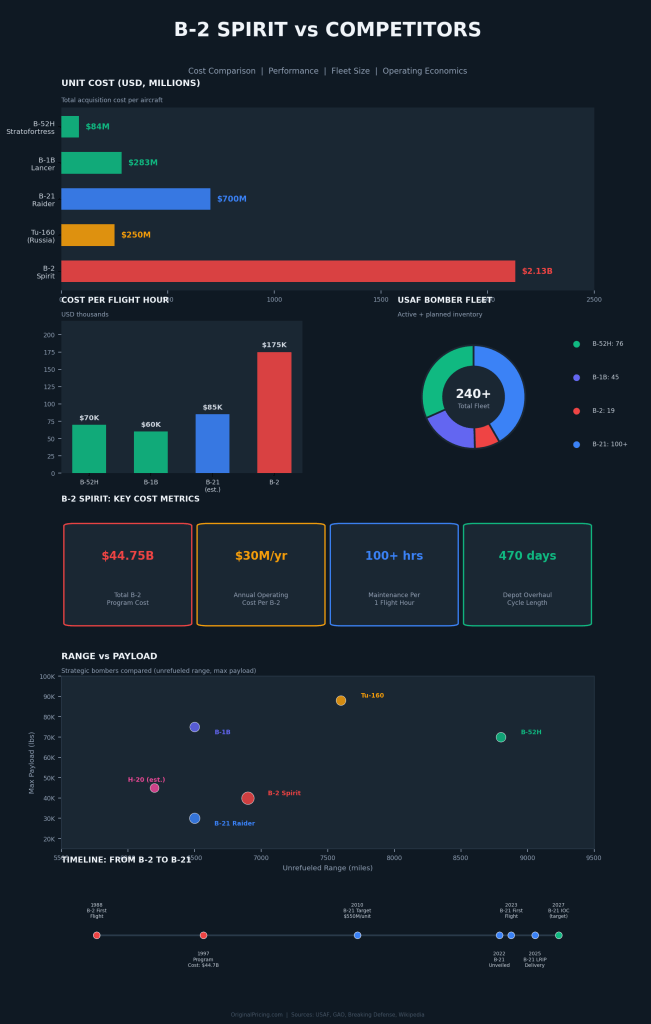
The B-2 Spirit stealth bomber costs approximately $2.13 billion per unit when total program costs are spread across just 21 airframes. That’s the inflation-adjusted figure from the U.S. Government Accountability Office. The flyaway cost (manufacturing alone) sits at around $737 million per aircraft in 1997 dollars, which translates to roughly $1.45 billion today. Operating costs add another $135,000 to $200,000 per flight hour, making the B-2 not just the most expensive bomber ever built, but the most expensive military aircraft in history by a wide margin.
What Does One B-2 Bomber Actually Cost?
The answer depends on how you count it. There are three different price tags people reference, and mixing them up is one of the most common mistakes in defense cost discussions.
Here’s the breakdown:
- Flyaway cost (airframe + engines + basic systems): $737 million per aircraft (1997 dollars), roughly $1.45 billion adjusted for inflation
- Total acquisition cost (includes R&D, testing, spare parts, retrofitting, software): $2.13 billion per unit
- Inflation-adjusted total cost: approximately $4.27 billion per aircraft in 2025 dollars
- Total program cost: $44.75 billion for all 21 aircraft, reported to Congress through fiscal year 1997
The reason the per-unit figure is so staggering comes down to basic math. The Air Force originally planned to buy 132 bombers. Then the Cold War ended, Congress slashed the order to just 21, and all those billions in research and development costs got divided across a fraction of the planned fleet.
How Much Does It Cost to Fly a B-2?
Buying a B-2 is just the beginning. Keeping one in the air is a financial operation all its own.
- Flight-hour cost: $135,000 to $200,000 (nearly double the B-52 or B-1)
- Annual operating cost per aircraft: approximately $30 million
- Maintenance ratio: over 100 hours of maintenance for every 1 hour of flight
- Fuel capacity: 167,000 pounds (roughly 24,925 gallons)
- Fuel burn rate: approximately 4.2 gallons per mile
- Single combat sortie cost: $1 million+ (factoring in fuel, maintenance, crew, refueling support)
- Longest recorded mission duration: 44+ hours nonstop with aerial refueling
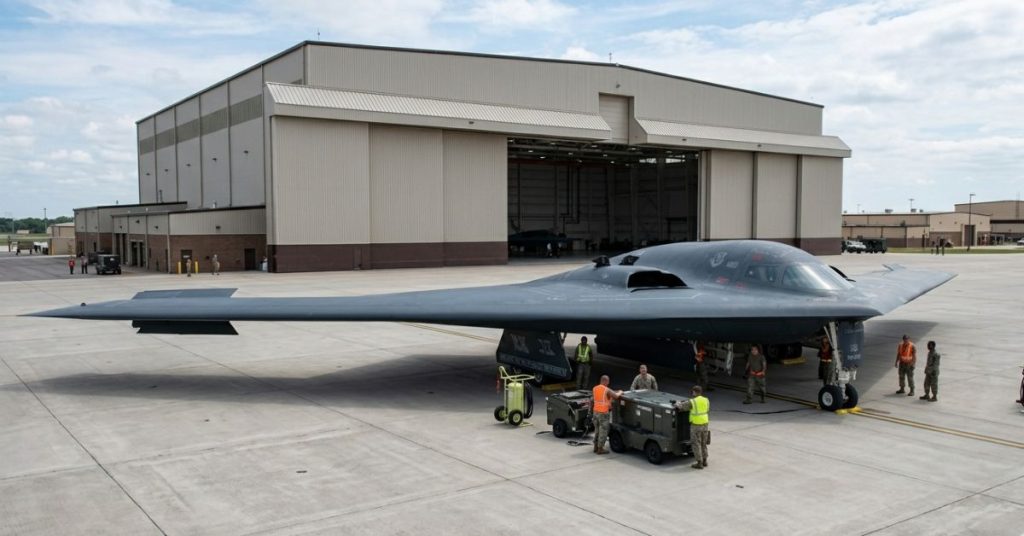
The high maintenance burden stems primarily from the stealth coatings. The B-2’s radar-absorbent materials need constant upkeep in climate-controlled hangars to maintain their low-observable properties. Every B-2 is based at a single location, Whiteman Air Force Base in Missouri, because only that facility has the specialized infrastructure.
B-2 Bomber Price in Global Currencies
People across the world search for the B-2’s price in their local currency. Here’s what $2.13 billion (total acquisition cost) looks like in different markets. Keep in mind, the B-2 is not available for export. Only the U.S. Air Force operates this aircraft. These conversions are for context only, similar to how people compare high-value technology pricing across borders.
| Country/Region | Approximate Price | Currency |
| United States | $2.13 Billion | USD |
| India | ₹17,800+ Crore | INR |
| United Kingdom | £1.68 Billion | GBP |
| European Union | €1.96 Billion | EUR |
| Pakistan | PKR 593 Billion | PKR |
| Bangladesh | BDT 256 Billion | BDT |
| Canada | CAD 2.95 Billion | CAD |
| Measurement | Per unit (total acquisition cost) | — |
These figures use approximate exchange rates and fluctuate daily. The key takeaway: in every currency, the B-2 represents an almost incomprehensible price for a single aircraft.
B-2 Spirit vs. B-21 Raider vs. China’s H-20: Cost Comparison
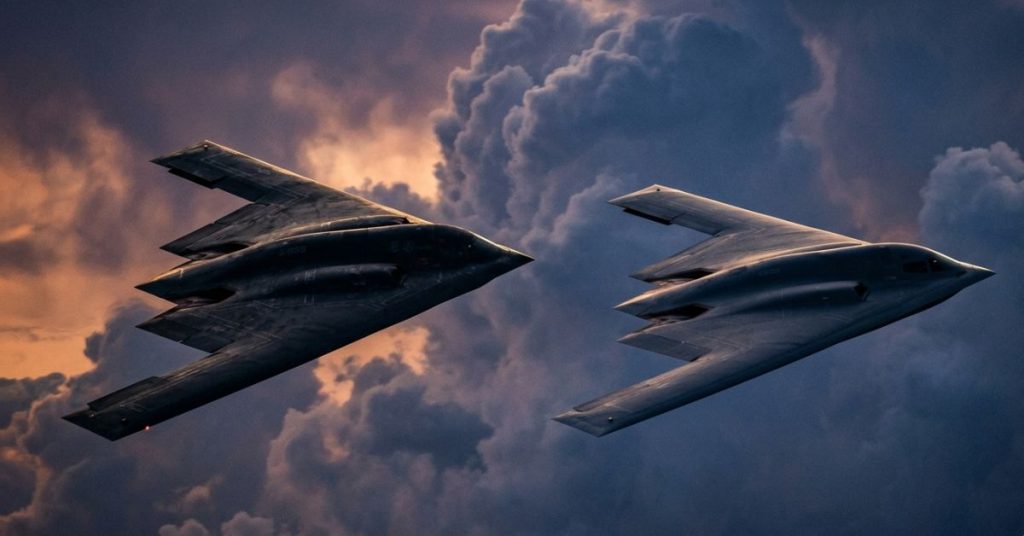
The B-2’s successor, the B-21 Raider, is already in flight testing with deliveries expected at Ellsworth Air Force Base by 2027. China’s H-20, still in development, represents Beijing’s attempt to match U.S. stealth bomber capability. Here’s how the pricing stacks up alongside other defense assets covered in our original pricing analysis approach.
| Specification | B-2 Spirit | B-21 Raider | H-20 (est.) |
| Unit Cost | $2.13B | ~$700M | Classified |
| Flyaway Cost | $737M (1997$) | ~$550M (2010$) | Unknown |
| Fleet Size | 19 active | 100+ planned | Unknown |
| Flight-Hour Cost | $150K-$200K | ~$75K-$100K est. | Unknown |
| Range (unrefueled) | 6,900 miles | Classified | 6,200+ miles est. |
| Payload | 40,000 lbs | Lower (classified) | 22,000-45,000 lbs est. |
| First Flight | 1989 | 2023 | TBD (2030s est.) |
| Status | Operational | Flight testing | In development |
| Measurement | USD | USD | USD (estimated) |
The B-21 is projected to cost roughly one-third of the B-2 per unit, thanks to modular design, digital engineering, and a production run of at least 100 aircraft instead of 21. Northrop Grumman’s first five production lots actually came in 28% under budget, a rarity in defense procurement.
Why the B-2 Costs $2 Billion: The Real Reasons
It’s tempting to blame waste or mismanagement, but the B-2’s price tag is really a story about math and timing.
The program developed entirely new stealth technology from scratch during the 1980s. Radar-absorbent materials, flying-wing aerodynamics, and sensor-evading design were all pioneered for this single aircraft. That research bill would have been spread across 132 planes. Instead, it landed on 21. When the Soviet Union collapsed, Congress argued the B-2 was a “bomber without a mission” and slashed procurement. President George H.W. Bush claimed ending the program could save $50 billion over five years.
The result: each surviving aircraft inherited a proportionally massive share of R&D costs, pushing the per-unit price into a category no other military aircraft has reached.
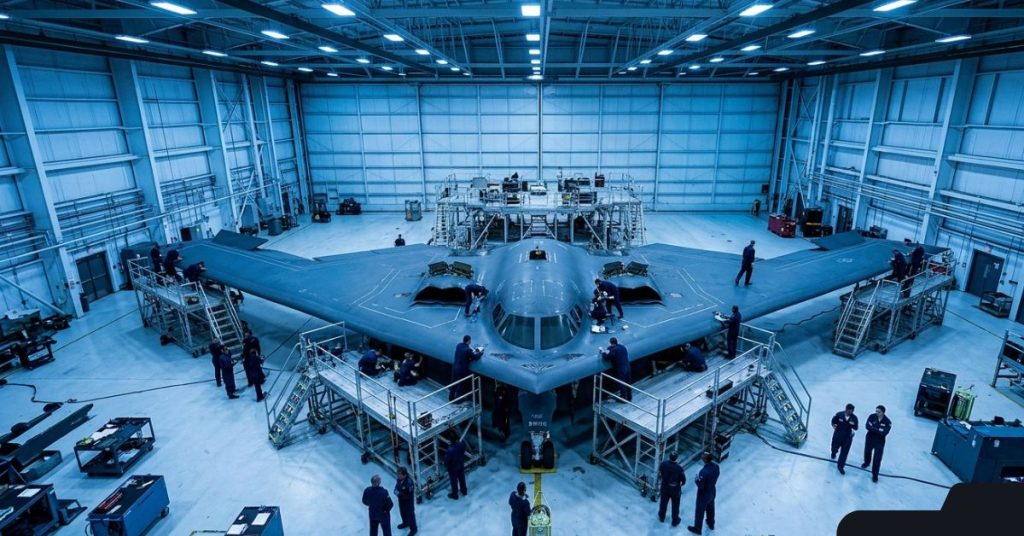
There’s also the infrastructure problem. The B-2’s stealth coatings are sensitive to moisture, temperature, and even prolonged sunlight exposure. Each aircraft requires a dedicated climate-controlled hangar. Specialized maintenance crews train exclusively on B-2 systems, and depot-level overhauls take roughly 470 days per aircraft. At any given time, a meaningful portion of the 19-plane fleet is unavailable for operational tasking because it’s undergoing maintenance.
B-2 Cost Per Hour: Breaking Down the Mission Economics
A question that surfaces constantly, especially after recent combat deployments, is what a single B-2 mission actually costs. The Department of Defense puts the base operating cost at approximately $150,000 per flight hour. Factor in fuel, mid-air refueling logistics, crew salaries, mission planning staff, and support aircraft, and a full combat sortie runs well over $1 million.
Fuel alone is a significant line item. The B-2 burns through roughly 50,000 gallons on long-range sorties from the continental U.S. to the Middle East or Pacific. These missions can last 36 to 44 hours nonstop, with multiple aerial refueling contacts. At current jet fuel prices, that’s $60,000 or more just in fuel costs per mission, before you count anything else.
Compare that to the B-52, which costs roughly $70,000 to $80,000 per flight hour, or the B-1 at around $60,000 per hour. The B-2’s stealth maintenance burden is what drives the premium. It’s not fuel consumption or crew size. It’s the constant upkeep of radar-absorbent coatings and the hyper-specialized ground equipment that no other aircraft demands.
Is the B-2 Worth Its Price Tag?
The B-2 has seen combat in Kosovo (1999), Iraq, Afghanistan, Libya, Yemen (2024), and most recently in the strikes against Iran’s nuclear facilities at Fordow and Natanz in June 2025, followed by further operations in the 2026 Iran conflict. It’s the only aircraft certified to carry the 30,000-pound GBU-57 Massive Ordnance Penetrator, which is purpose-built for destroying deeply buried targets. For a deeper look at how advanced military technology pricing compares to cutting-edge robotics and defense tech, the parallels in R&D cost structures are striking.
A single B-2 can carry up to eighty 500-pound GPS-guided bombs, meaning one aircraft can simultaneously engage multiple hardened targets in a single pass. No other operational platform combines that payload capacity with true stealth penetration.
What About RC B-2 Bomber Prices?
For people searching for RC (remote control) B-2 bombers, these are scale model replicas available from hobby retailers. Prices vary widely depending on size, material, and flight capability. Basic foam RC B-2 models start around $50 to $150. Mid-range flying-wing kits with brushless motors run $200 to $500. High-end, large-scale composite models with GPS and FPV systems can reach $1,000 to $3,000+.
These are obviously a different universe from the real thing, but they’re a legitimate and popular search query.
Common Mistakes People Make About B-2 Pricing
- Confusing flyaway cost ($737M) with total program cost ($2.13B per unit): the full number includes decades of R&D, not just manufacturing
- Assuming other countries can buy B-2s: the Spirit has never been exported and likely never will be. Only the U.S. Air Force operates it.
- Comparing B-2 costs to the B-21 without context: the B-21 benefits from a planned fleet of 100+ units, spreading R&D costs much more efficiently
- Thinking the B-2 is being replaced immediately: the Air Force plans to operate the B-2 until at least 2032, alongside the B-21
- Ignoring operating costs: buying the aircraft is only part of the expense. At $30 million per year per plane in operating costs, the lifetime bill dwarfs the purchase price
The B-2’s Future and the B-21 Transition
The Air Force has awarded Northrop Grumman a $7 billion modernization contract to keep the 19 remaining B-2s combat-ready through 2029. After that, the fleet will begin retiring as the B-21 Raider reaches operational strength. The Air Force recently announced a $4.5 billion agreement to ramp up B-21 production capacity by 25%, with aircraft expected on the ramp at Ellsworth Air Force Base by 2027.
The B-21’s projected per-unit cost of around $700 million (in current dollars) represents a dramatic reduction from the B-2’s price, partly because Northrop Grumman has applied digital engineering techniques that reduced design-to-production changes from the typical 15-20% down to just 1%. The lesson from the B-2’s cost story is clear: production volume matters more than almost anything else in driving per-unit military aircraft costs.
Sources: U.S. Air Force B-2 Spirit Fact Sheet | U.S. Government Accountability Office (GAO) | Breaking Defense | Wikipedia – Northrop B-2 Spirit