
Aluminum scrap currently averages around $0.69 per pound across U.S. scrap yards, though prices range dramatically from $0.05/lb for low-grade wound motors to over $1.15/lb for clean aluminum wire. LME aluminum futures recently traded near $3,465 per tonne (roughly $1.57/lb for primary metal), while domestic scrap values follow at a discount depending on grade, purity, and regional demand. Tariff activity, geopolitical disruptions, and China’s 45 million-tonne production cap are all pushing the market in different directions heading into mid-year.
| Grade / Item | Low | High | Unit |
|---|---|---|---|
| Clean extrusion 6063 | $0.70 | $0.95 | USD/lb |
| Sheet aluminum | $0.63 | $0.75 | USD/lb |
| Cast aluminum | $0.65 | $0.83 | USD/lb |
| Aluminum cans (UBC) | $0.40 | $0.55 | USD/lb |
| Painted / old sheet | $0.55 | $0.70 | USD/lb |
| Aluminum breakage | $0.20 | $0.30 | USD/lb |
| Country | Typical Range | Per Tonne | Cur. |
|---|---|---|---|
| United States | $0.20 – $0.95 /lb | $440 – $2,100 | USD |
| Canada | C$0.60 – C$2.90 /kg | C$600 – C$2,900 | CAD |
| United Kingdom | £0.35 – £1.55 /kg | £350 – £1,550 | GBP |
| Germany / EU | €0.40 – €1.90 /kg | €400 – €1,900 | EUR |
| Australia | A$0.65 – A$3.10 /kg | A$650 – A$3,100 | AUD |
| India | ₹40 – ₹185 /kg | ₹40,000 – ₹185,000 | INR |
| UAE / Dubai | 1.6 – 7.7 AED/kg | 1,600 – 7,700 AED | AED |
Rates for every other metal grade are collected in the complete scrap metal price index.
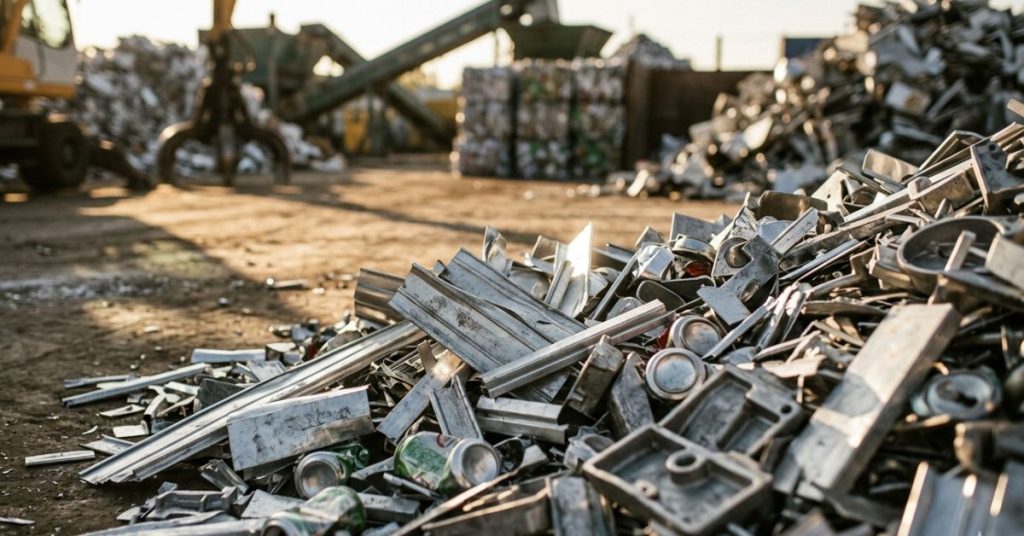
Current Aluminum Scrap Prices by Type
If you’ve ever wondered whether that pile of old gutters or engine blocks in your garage is actually worth hauling to a yard, the short answer is yes. But the amount you’ll get depends entirely on what type of aluminum you’re bringing in and how clean it is.
Here’s what different grades are fetching right now at U.S. scrap yards:
| Aluminum Scrap Type | Average Price (per lb) | Measurement |
| Clean Aluminum Extrusions | $0.85 | USD/lb |
| Clean Aluminum Wire | $1.00 – $1.15 | USD/lb |
| Aluminum Siding/Gutters | $0.46 – $0.67 | USD/lb |
| Aluminum Rims (clean) | $1.00 | USD/lb |
| Aluminum Cans (UBCs) | $0.38 – $0.45 | USD/lb |
| Cast Aluminum | $0.50 | USD/lb |
| Sheet Aluminum | $0.55 – $0.65 | USD/lb |
| Aluminum Breakage (mixed) | $0.18 | USD/lb |
| Aluminum Thermopane | $0.33 | USD/lb |
| Aluminum Wound Motors | $0.05 | USD/lb |
The national average for general aluminum scrap sits around $0.69/lb. But clean, sorted material consistently fetches 20% to 40% more than unsorted loads. That gap alone should tell you sorting is worth the effort.
What’s Actually Driving Aluminum Scrap Prices?
Aluminum scrap doesn’t exist in a vacuum. Its price is tied directly to what’s happening on the London Metal Exchange, what’s going on with tariffs, and how much energy it costs to smelt primary metal.
Here are the key stats shaping the market right now:
- LME aluminum futures closed near $3,465/tonne ($1.57/lb) as of early April, down from the three-year high of $3,270 hit in late January
- Over the past 12 months, aluminum prices have climbed roughly 20%, largely due to constrained global supply
- China’s aluminum output hit the government-imposed cap of 45 million tonnes, meaning production growth from the world’s largest producer has effectively stalled
- U.S. aluminum tariffs now sit at 50% on imported articles made entirely of aluminum, with derivative products facing 25%, following an April 2 proclamation strengthening Section 232 metals tariffs
- Aluminum scrap itself has remained exempt from import tariffs on primary metal, which has increased demand for recycled feedstock from European and North American suppliers
- Novelis (the largest rolled aluminum producer) reported a $28 million net negative tariff impact in Q1 FY2026, alongside structurally higher scrap costs cutting into margins
The bottom line: tariffs on primary aluminum are making recycled scrap more attractive as a feedstock, which keeps domestic scrap demand strong. But geopolitical disruptions (including the ongoing Iran conflict affecting oil prices) are creating short-term volatility that makes week-to-week pricing unpredictable.
How LME Pricing Connects to Your Local Scrap Yard?
You might be wondering why global commodity exchanges matter when you’re just trying to sell some old aluminum siding. The connection is more direct than most people realize.
Over 75% of physical aluminum contracts worldwide use a pricing formula based on the LME 3-month contract settlement price plus a regional premium. For the U.S. Midwest, that premium typically adds $80 to $300 per tonne on top of the LME base. Your local scrap yard then prices its buyback rates as a percentage discount from this combined benchmark.
So when LME aluminum jumps from $3,000 to $3,465 per tonne (as it did over recent months), scrap yard prices tend to follow with a slight delay. That delay is your opportunity. Tracking the LME price gives you a head start on knowing when local yard prices are about to move up, and when it’s smarter to hold.
Clean vs. Dirty Aluminum: Why Contamination Costs You 80%?
This is where most casual scrappers leave money on the table. A single steel bolt in a 1,000-pound bin of aluminum can downgrade the entire load from “clean” pricing to “dirty” or “irony” pricing. That’s not a minor difference. Contaminated material can lose up to 80% of its value compared to properly sorted, furnace-ready scrap.
Clean aluminum means zero contamination: no plastic coatings, no rubber gaskets, no steel attachments, no organic debris. Industrial recyclers who implement structured sorting protocols on the factory floor report up to 40% higher annual revenue from their aluminum streams. Even if you’re a homeowner scrapping a few old patio chairs, removing the plastic webbing before hauling them in is the difference between getting $0.50/lb and getting far less. If you’re working with vehicle-related scrap and pricing, remember that aluminum rims sell at a premium, but only when steel valve stems and attached rubber are fully removed.
Common Mistakes That Kill Your Scrap Payout
- Mixing metals in one bin: Aluminum won’t stick to a magnet, but zinc and die-cast look nearly identical. Always run the magnet test before loading up.
- Ignoring alloy grades: 6061 and 7075 aluminum are different alloys with different values. Separating by grade gets you better pricing at yards that sort by spec.
- Selling wet or oily material: Water weight and oil contamination lead to deductions at the scale. Store materials in a dry, covered area before selling.
- Selling in small quantities: Most yards offer better rates for bulk loads (100+ pounds) because transportation costs are spread across more weight.
- Not checking the market first: Aluminum scrap prices fluctuate weekly. Selling during a dip (like the recent pullback from geopolitical tensions) means leaving money on the table.
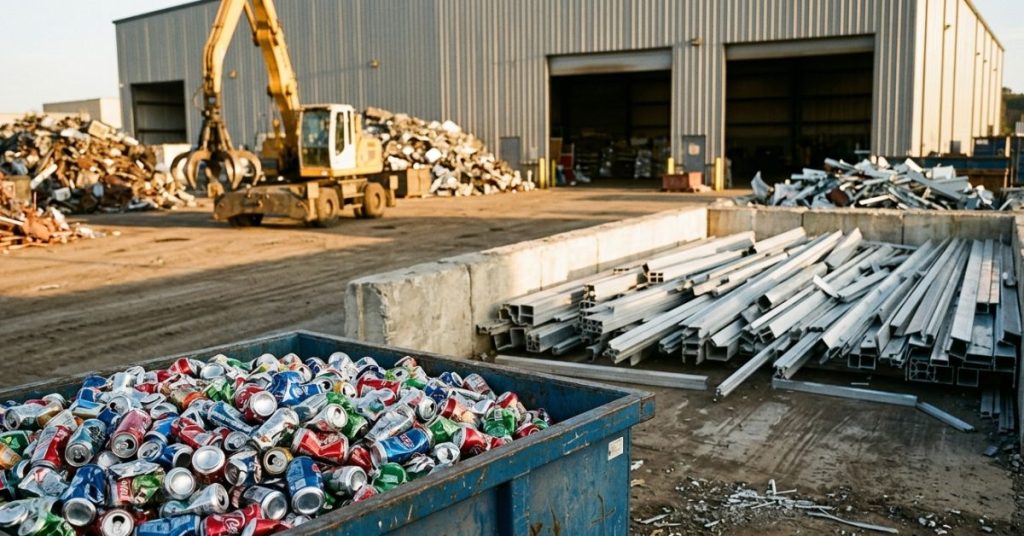
The Tariff Picture and What It Means for Scrap
The tariff situation has gotten more complicated this year. The White House issued a new proclamation on April 2 that restructured how Section 232 metals tariffs are calculated. Articles made entirely of aluminum now face a flat 50% tariff on their full value. Derivative products substantially made of aluminum pay 25%. Certain metal-intensive industrial equipment gets a lower 15% rate through 2027 to support domestic manufacturing expansion.
Here’s the critical detail for scrappers: aluminum scrap has remained exempt from these primary metal tariffs. That exemption has created a surge in demand for domestic and imported scrap as a more affordable feedstock alternative. American mills are pulling in more scrap from European suppliers (particularly Germany and Spain) alongside traditional sources from Mexico and Canada. This dynamic is supporting scrap prices even when broader tariff impacts ripple through other markets.
On the supply side, wide spreads between scrap and the Midwest Transaction Premium have made contract negotiations tricky. Many dealers are shifting from long-term contracts to spot and quarterly deals to stay flexible. As one major scrap processor noted, the entire industry is watching for any sign that tariffs could be reduced or restructured, which would shift pricing dynamics overnight.
Global Supply Constraints Tightening the Market
Several supply-side factors are keeping the aluminum market tight. China’s government-imposed production cap means no new output growth from the country that produces nearly 60% of the world’s primary aluminum. Chinese smelters looking to expand into Indonesia have hit obstacles with local regulations and higher energy costs.
Meanwhile, smelter disruptions in Iceland, Mozambique, and Australia (from equipment failures, energy spikes, and geopolitical risk) have further constrained primary supply. This makes recycled aluminum increasingly attractive to manufacturers, particularly in the EV and automotive sectors where lightweight aluminum alloys are in high demand.
In Europe, scrap supply is tightening as exports to non-EU markets continue rising due to price differentials. A significant portion of European furnace capacity is sitting idle because recyclers can’t source enough feedstock domestically. Industry groups have started lobbying for EU export restrictions on scrap to protect local recycling networks.
When to Sell: Seasonality and Timing
Construction activity ramps up during warmer months, which historically boosts demand for aluminum scrap. Yards tend to pay slightly higher rates from late spring through early fall. Holiday periods and winter months usually see reduced industrial activity and lower prices.
Right now, the market recommendation from industry analysts for aluminum scrap is “sell.” Sheet aluminum prices are up $0.07 to $0.10 per pound over recent weeks despite some pullback. If you’ve been holding, this is a solid window, particularly before the uncertainty from new tariff calculations fully works through the system.
Quick Reference: Aluminum Scrap Price Comparison
| Metric | U.S. Average | Canada Average | LME Primary |
| General Scrap | $0.69/lb | $0.68/lb | N/A |
| Primary Aluminum | N/A | N/A | $1.57/lb |
| Price Change (12mo) | +20% | +18% | +20.13% |
| Tariff on Primary | 50% | Exempt | N/A |
| Tariff on Scrap | Exempt | Exempt | N/A |
| Measurement | USD/lb | USD/lb | USD/tonne |
The Real Takeaway
Aluminum scrap pricing is more dynamic right now than it’s been in years. Between tariff reshuffling, a production cap in China, and growing demand from EV manufacturers, the fundamentals support continued strength in scrap values. But short-term swings from geopolitical events mean timing your sale matters.
Sort your material. Remove contaminants. Track LME prices. And don’t settle for the first yard you find, because the difference between a yard paying $0.50/lb and one paying $0.85/lb for the same clean extrusions is real money. As one industry tracker put it: preparation turns scrap from waste into a strategic asset.
Related scrap price guides
- Zinc Scrap Price: Die Cast, Anodes & Sheet Values Today
- Shredded Metal Scrap Cost: Mill Benchmarks & Yard Payouts
- Stainless Steel Scrap Price: 304, 316 & 430 Grade Values
- BMW Catalytic Converter Scrap Price Today: What Your Old Cat Is Actually Worth?
- Scrap metal price index — all 25 materials and part types